Cat nutrition throughout life stages – how to feed your cat correctly?
A cat’s health, appearance, and vitality depend directly on its diet. A properly selected and balanced diet is the basis for the well-being of every cat, whether it is a kitten, adult, or senior. In this guide, we take an in-depth look at the best food for kittens, adult cats and senior cats, and explain why high-quality Super Premium cat food is essential for your cat’s health.
The importance of high-quality cat food
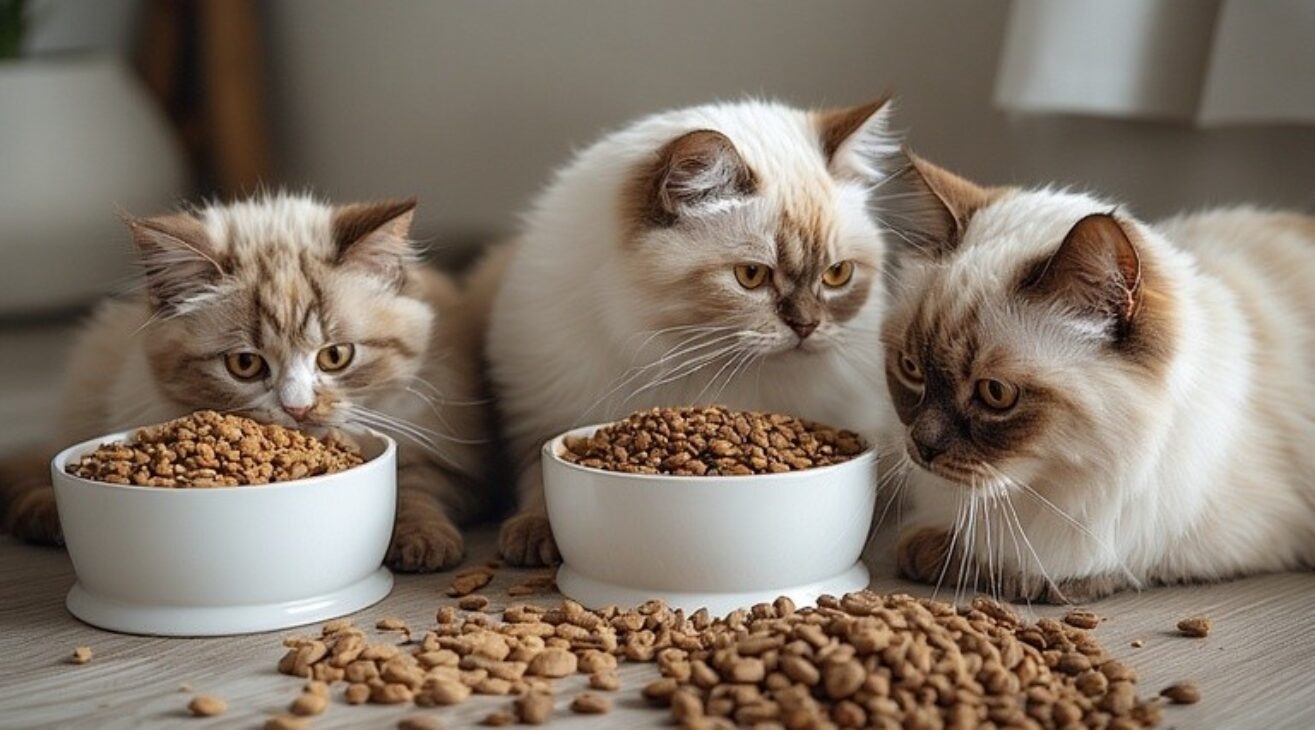
Cats can only be fed commercial cat food – i.e. kibble and canned food – but it must be at least super premium quality and made from high-quality raw ingredients. Only this type of food ensures that cats get all the necessary nutrients, minerals, and vitamins without overloading their bodies.
Cheap vs high-quality cat food
The cat foods commonly found in grocery stores and advertised on TV (e.g., Kitekat, Darling, Wishkas, etc.) are made from the cheapest possible raw materials and are not nutritionally balanced in terms of vitamins and minerals.
The raw materials often consist of byproducts from meat processing plants—tails, hooves, jawbones with teeth, fur-covered skin, and the like—that are no longer suitable for human consumption. This mixture is ground up, mixed with flavorings and seasonings, and packaged in colorful packaging to give the impression of high quality.
Unfortunately, cheap cat food sooner or later leads to health problems: frequent digestive disorders (vomiting, diarrhea), dull and brittle fur, and, especially in male cats, urinary tract diseases such as bladder infections and stones.
Why choose super premium cat food?
Loomapoodides ja loomakliinikutes müüdavad super premium ja veterinaarsed kassitoidud (nt Farmina, Royal Canin, Hill’s, Specific, Virbac, Pro Plan, Eukanuba, Josera jne.) on tunduvalt kallimad, kuid need on oma hinda väärt.
Need toidud sisaldavad kvaliteetset liha, püsiva koostisega tooraineid ja on paremini seeditavad. Kass saab samast kogusest rohkem toitaineid, sööb pikapeale vähem ning väljaheidete hulk väheneb – seega kulub ka kassiliiva vähem.
In addition, foods tailored to a cat’s age and activity level—such as kitten, adult, neutered, or senior—are available, all of which are balanced in terms of nutrients, energy, and vitamins.
Neutered cats need about 25% less food than unneutered cats of the same weight.
Natural foods suitable for cats
A cat’s diet can be supplemented with natural foods that provide variety and support the body. If you choose to feed your cat homemade food, keep in mind that it must be safe and easily digestible.
The following are suitable for cats:
- Chicken meat and all chicken parts – lungs, liver, heart; suitable both raw and cooked
- Turkey and other poultry meat
- Minced meat, wild game and lamb, as well as animal hearts
- White fish (e.g., silver hake, mintai) – always heat-treated, 1–2 times a week
- Fermented milk products – sour cream, sour milk, kefir, plain yogurt, cottage cheese
- Occasionally, a boiled egg
These foods can supplement super premium cat food, but should not replace it entirely, as homemade food does not always provide all the necessary vitamins and minerals.
1. Kitten (0–12 months)
Kittens grow very quickly and need plenty of energy and nutrients to do so. Their muscles, bones, and immune systems are developing at full capacity, which is why kittens need food that is very nutritious and of high quality.
The best food for kittens
Kittens should be fed special dry or wet food labeled “kitten,” which is specifically formulated to meet the needs of growing cats.
This type of food contains a higher protein content (30–40%), more energy, calcium, and phosphorus—all of which support bone and tooth development.
Kittens should be fed 4–5 times a day in small portions to avoid overfeeding and keep their energy levels steady. When a kitten reaches about one year of age, it can gradually be transitioned to adult cat food.
2. Adult cat (1–7 years)
Adult cats need balanced, high-quality food that helps them maintain a healthy weight, strong muscles, and a good coat.
What is the best food for adult cats?
Adult cats should be fed food labeled “adult,” which is balanced in terms of energy, protein, and fat. If your cat has been spayed or neutered, choose food labeled “sterile” or “neutered” – these contain fewer calories and less fat, but enough protein to maintain muscle mass and prevent obesity.
Fluid intake is also important. Since cats naturally drink very little, you should also offer wet food (canned food, pastes, stews), which helps prevent urinary tract problems and supports kidney function.
It is recommended to feed an adult cat twice a day or to use portion control if food is available at all times.
3. Nutrition for senior cats (7+ years)
Older cats require special attention when it comes to nutrition, as their metabolism slows down and their organs—especially the kidneys and liver—may begin to weaken.
Food for senior cats should be easily digestible, with a moderate protein content and low phosphorus levels, so as not to strain the kidneys.
The Best Food for an Older Cat
Foods designed for seniors are labeled “senior,” “mature,” or “7+,” and they contain antioxidants and omega fatty acids that support joints, the immune system, and the coat.
As they age, cats may become less active, so it’s important to ensure they eat enough and don’t lose weight.
It’s recommended to have an annual health checkup and blood test to assess kidney and liver function and, if necessary, adjust their diet according to your veterinarian’s recommendations.