Cat breeds
The world of cats is incredibly diverse—there are dozens of different breeds around the world, each with its own unique appearance, personality, and needs. Our goal is to help you make an informed choice so that your life with your new cat will be happy, harmonious, and long-lasting.
Abyssinian
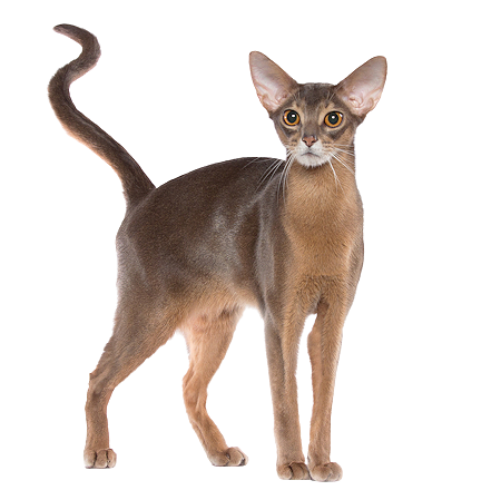
The Abyssinian is an elegant, short-haired, and very active cat breed, known for its silky “ticked” coat and intelligent temperament.
The coat is dense, elastic, and glossy. The body is long, and the muscles are well-developed. The ears are large, set wide apart, and tilted forward. The tail is long, tapering, and darker at the tip. The eyes are golden or green, very slanted, and almond-shaped. The head is triangular and slightly sloping. The facial expression is intelligent and alert. Known for their unique spotted coat, Abyssinians resemble wildcats.
Abyssinians are divided into two categories: traditional and silver. Traditional colors include ruddy, cinnamon, chocolate, diluted blue, fawn, and lilac. Silver colors include black-silver, cinnamon-silver, chocolate-silver, diluted blue-silver, fawn-silver, and lilac-silver.
They are athletic, alert, very active, and extremely curious about everything around them. Extremely loyal and very people-oriented, Abyssinians are called dog-cats. In general, they get along well with children, dogs, and other cats. They are playful and very sociable – well suited to people who are looking for a communicative and intelligent cat. Abyssinian cats need mental and physical stimulation and love to climb to high places and observe their surroundings. The breed is generally healthy but needs regular care and attention.
- Sobib aktiivsetesse kodudesse, kus pakutakse vaimset ja füüsilist stimulatsiooni
- Very well suited for people who want a companion, not just a pet
- Gets along well with other cats and friendly dogs
Needs climbing opportunities and toys – perfect for cats who love climbing trees and sitting on windowsills - Generally a healthy and hardy breed, but hereditary diseases may occur (e.g., kidney problems or progressive retinal atrophy – PRA).
- Grooming is easy – brushing once a week is sufficient.
- Requires regular attention and activity to prevent boredom-related behavior
American Curl
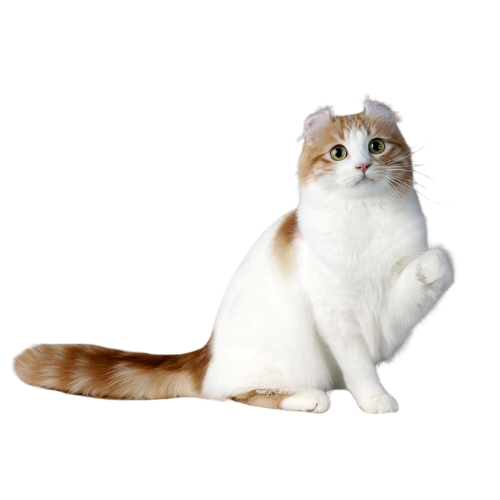
The American Curl is a unique cat breed known for its distinctive backward-curling ears. This breed originated from a natural mutation in the United States in the 1980s and has been loved ever since for its friendly nature and unusual appearance.
American Curls have semi-long hair and curly hair. The American Curl is a medium-sized cat weighing 2.3–4.5 kg and does not reach sexual maturity until 2–3 years of age. Females weigh 2.3–3.6 kg and males 3.2–4.5 kg. The coat is silky and shiny and does not require any special care. The tail is bushy and long. The eyes are large and bright. All colors and patterns are permitted.
American Curls are friendly and active cats that are often said to have a somewhat “dog-like” attachment to their family. They like to gently nudge their humans with their paws and often follow their favorite family members from room to room.
They are also exceptionally intelligent cats. Some are known to have learned how to turn switches on and off, and many learn how to open and close doors and cabinets.
However, it is important to note that American Curls do not like to be left alone for too long, so you need to consider whether your schedule allows you to give them several hours of attention and playtime every day.
American Curls are not particularly talkative, but rather meow quietly. As sociable cats, most of them get along well with children and other pets, especially if they offer them additional opportunities for play and fun.
- Friendly, sociable, and calm – well suited for families and children
- Playful throughout life – retains kitten-like curiosity even in old age
- Loves to be close, but isn’t pushy
- Highly adaptable – suitable for both apartments and private homes
- Generally healthy and strong breed
American Bobtail
The American Bobtail is a sturdy, short-tailed cat breed prized for its wild appearance, intelligent nature, and friendly disposition.
The breed originated in the United States in the 1960s, when a natural tail mutation gave rise to this distinctive cat.
The American Bobtail is notable for its stubby tail, which is about one-third to one-half the length of a typical cat’s tail. This is the result of a genetic mutation affecting the cat’s body type that impacts tail development, similar to that seen in the Manx cat. The cat has a moderately long and sturdy body. The torso is broad and full-bodied; the hips are sturdy and nearly as wide as the chest, while the hind legs are longer than the front legs. The paws are large and rounded, and may be webbed; the head is broad and wedge-shaped. The muzzle is broad and straight, with a gentle concave curve on the bridge of the nose, prominent whisker pads, and strongly defined jawbones. The ears are medium-sized, with a broad base and rounded tips, set evenly on top of and to the sides of the head. The eyes are almost almond-shaped. Eye color depends on the coat color. The tail is straight or slightly curved.
The coat may be short or medium length, dense. All colors and patterns are permitted, with or without varying amounts of white on the chest, neck, legs, or underside.
American Bobtails are exceptionally intelligent. Although they are independent, that doesn’t mean they aren’t affectionate! These cats form strong bonds with their family members and are known for coming up with unique interactive games, which often involve hunting. They love to lie in wait and then pounce on a toy, often proudly carrying their “prey” around in their mouths.
The American Bobtail is a calm, balanced, and tolerant cat that is perfect for families with children and gets along well with dogs. Due to their high intelligence, they are particularly sensitive to the moods of family members and are known for their ability to seek out owners in distress to offer comforting purrs or cuddles. They are often involved in assisting people with special needs and also help with post-traumatic stress disorder or anxiety. American Bobtails are easy to train on a leash and enjoy walking with their family members.
Perfect for families, child-friendly, gets along well with dogs
- Loves being with people, but is not pushy
- Needs mental and physical activity, as they are curious and intelligent
- Generally a healthy breed, when raised responsibly
Balinese
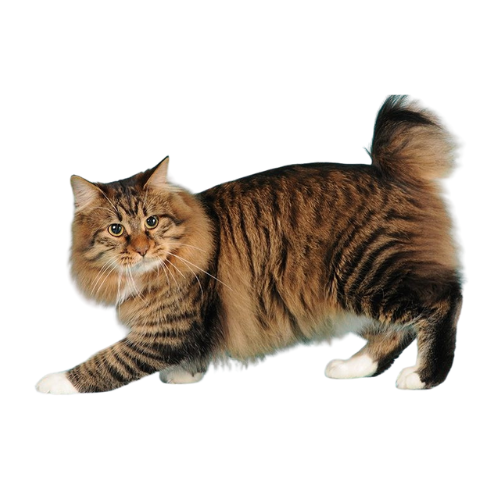
The Balinese is a slender, elegant, and graceful cat. Everything about it is long—its legs, body, and tail. Because its hind legs are longer than its front legs, it looks as if the cat is always ready to pounce. Its head is elongated, and its face is adorned with almond-shaped, sky-blue eyes and erect ears.
To the touch, the Balinese resembles a rabbit: it has a distinctive, silky-soft coat. The tip of the Balinese’s tail looks like an ostrich feather, and its hind legs are adorned with elegant “calico pants.” This breed has no undercoat, which is why the Balinese’s coat is always smooth.
The closest relative of the Balinese is the Siamese cat. Together with the Oriental and Javanese, these four breeds form the Oriental group of cats.
Every Bali cat owner will tell you that these cats are not only as intelligent as humans, but they also believe that they ARE humans!
The Balinese is sincere and friendly. It wants to be involved in everything that happens in the house. They are intelligent and wise cats who consider their owner a close relative—and, like themselves, a cat. Balinese cats can remember the meanings of a dozen or so words and, as skilled “psychologists,” can gauge their owner’s mood and state of mind. They are quieter than Siamese cats—it seems that their fur lends softness not only to their appearance but also to their temperament. But don’t for a moment think that this means they are quiet cats. Constant communication is the norm, and it can range from comforting purrs to the occasional cry of protest—because you’re not paying them enough attention!
- Generally a healthy breed, but may be prone to hereditary problems common to Siamese cats (e.g., dental problems or heart conditions).
- The coat is easy to care for – brushing once a week is sufficient.
- Needs social contact – not well suited to being left alone for long periods of time
- Suitable for active families, single people, or households where people are often at home
Bengal
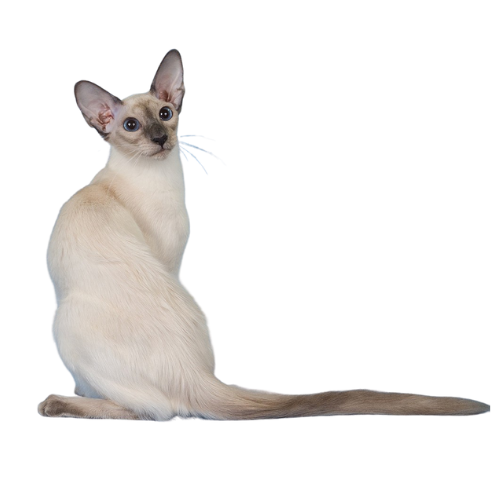
The Bengal cat is a large, slender, and very muscular cat with a thick, low-set tail. Its wild appearance is emphasized by its distinctive dense and luxuriously spotted or marbled coat. The undercoat varies from dark yellow to sandy or brown. The belly is lighter in color. The spots or marbling are arranged horizontally. Rosettes, which are two-colored spots, differ from single-colored spots. The cat’s broad head is adorned with small ears and prominent whisker pads.
The almond-shaped eyes have black rims. The thick tail is curved and has a black tip. No other cat breed has the golden or pearl dust effect (shine) in its coat like some Bengal cats. This is a very active and therefore demanding cat breed.
The body is elegant and athletic. It has powerful and strong muscles. The paws are long. The Bengal cat can grow up to 30 cm in height and 30 to 35 cm in back height. Females weigh an average of 4 to 6 kg and males up to 7 kg.
Despite its wild appearance, the Bengal cat is gentle, obedient, and sociable. This cat is also very sensitive, which allows it to sense changes in its owners’ moods.
His playful nature makes him a true playmate for children, with whom he forms genuine friendships.
The Bengal is an athletic cat that needs to hunt, climb, and run. It is also very curious and adventurous. It likes to explore its surroundings. Its need for freedom and movement requires that it be given some space to play or at least a place where it can climb comfortably (cat tree).
Bengal also stands out for its talkativeness. Its rather loud meow, reminiscent of its wild roots, is easily recognizable.
- Energetic and curious – needs lots of exercise and mental stimulation
- Smart and easy to train – learns tricks, loves to play, can be trained to walk on a leash
- Sociable and affectionate – loves its people, but is not a typical lap cat
- Often “talkative,” expresses himself through meowing and body language
- Suitable for active people and families who can provide enough activities and company
- Needs space to move, play, and explore
- Not suitable for homes where it would often be left alone – boredom can lead to mischief
- Generally a healthy breed, but hereditary problems may occur (e.g., heart disease – HCM, kidney problems)
Birma
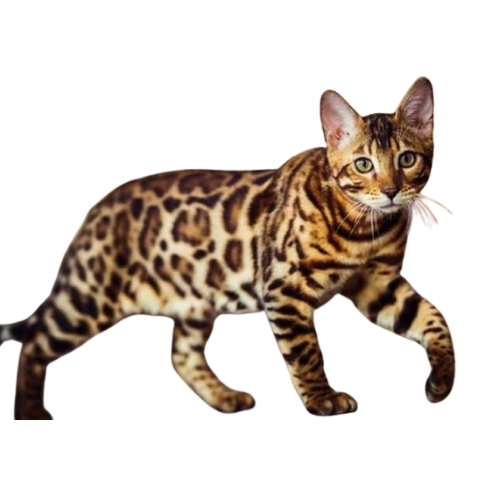
The Briman cat has semi-long fur. Its lighter base color is complemented by darker areas on the face, paws, ears, and tail. This coloration is one of the most important standards for this breed. It is a larger cat with a stocky body and short legs. The Birman cat has blue eyes and “white socks” on its dark paws. The front socks only cover the paws, but the rear socks are longer. The head is broad and round, with medium-sized ears. The color range includes various point tones: blue, chocolate, lilac, cream, red, tortoiseshell, etc.
Sacred Birman cats are extremely sociable, trustworthy, and gentle, and are easy to get along with, making them ideal pets. They enjoy being around people. Sacred Birman cats can be described as moderate cats. They are playful and active, but not demanding, and sociable, but not the center of attention.
All Sacred Birman cats want to be close to people and are good with other pets if introduced to them properly. Sacred Birman cats are an excellent choice for families with children because they are calm, patient, and loving. They are very social cats that cannot tolerate long periods of solitude.
Birman cats are relatively quiet cats. Most have a soft, gentle, chirping voice. However, because owners often respond to their meows, they can become surprisingly talkative.
- Semi-long, silky coat that does not shed easily
- White “gloves” on the front paws and “socks” on the hind paws – a characteristic and unique feature of the breed
- Suitable for children and other animals
- Loves being around people, but isn’t pushy
- Not overly talkative, but gently expresses their opinion
- Plays willingly, but not overly actively
- Püha birma kass on üldiselt terve tõug, kuid vastutustundlik aretus on oluline
Burma
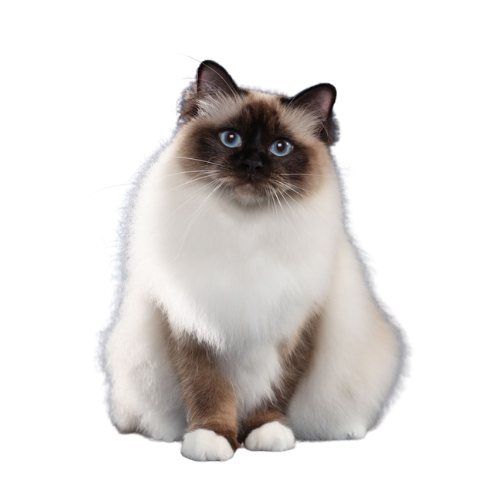
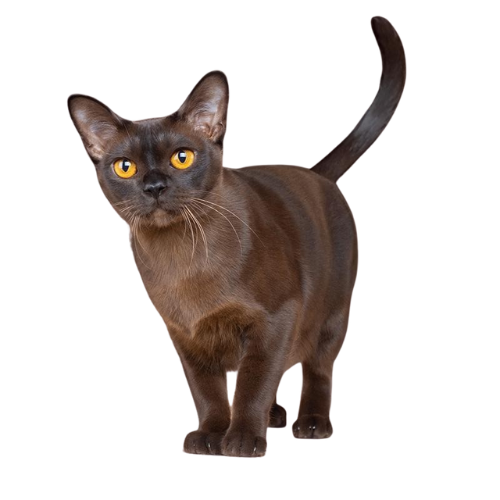
The Burmese is a medium-sized cat with a round head and an elegant, well-muscled body. This breed is not as large or stocky as the British Shorthair, but not as slender or delicate as the Siamese. The eyes are large and shiny and can be any shade of yellow. It often seems that the color of the eyes changes with the daylight. The tail is straight and ends in a rounded brush-like tip. A distinctive feature of the Burmese is its short, shiny, close-fitting coat with almost no undercoat. Burmese cats come in 10 colors, but in all colors, the lower areas of the back are gradually lighter in color.
Burmese cats are highly intelligent, cheerful, sensitive, and loyal pets. They need a lot of attention and affection. They love people, but also enjoy the company of other cats and dogs.
Although Burmese cats are ideal for families, children, and the elderly, they are not the right choice for people who want a calmer pet that spends most of its time relaxing. The sociable nature of Burmese cats also means that they need human or feline companions. Social interaction cannot be replaced by toys. Therefore, it is important for working owners to purchase two Burmese kittens, ideally from the same litter. This reduces the stress caused by the new environment and, in the long run, the cats will be much calmer and more affectionate. A happy Burmese cat is a blessing to the home, while an unhappy cat can cause chaos.
Generally a strong breed, but genetic problems such as hypertrophic cardiomyopathy (HCM), diabetes, or a tendency toward dental problems may occur.
- The coat requires little maintenance – occasional brushing or smoothing with your hand will keep it shiny.
- Needs emotional contact – loneliness can cause stress
- For active people and families
- For those who want a lot of interaction from their cat
Burmilla
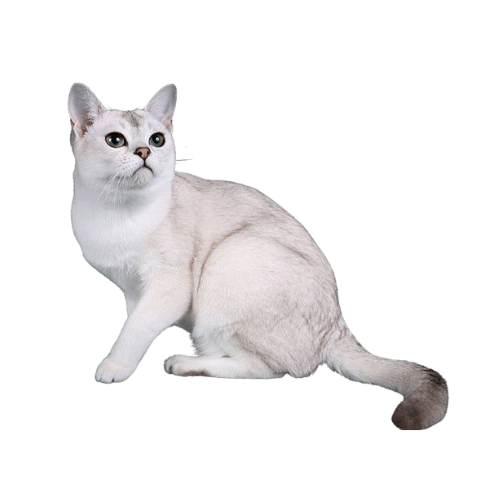
Burmilla, a relatively recent breed, perfectly embodies elegance and affection. With its shiny silver coat and friendly nature, it is the ideal companion for families and cat lovers.
The Burmilla is a medium-sized cat with a strong, muscular body and a straight back, resembling a Burmese. Females are considerably smaller and more delicate than males. Their heads are slightly rounded, with a wedge-shaped muzzle and widely spaced ears. Their expressive eyes can be any color from gold to green. Their coat is short and close-fitting. The undercoat is lighter and the hair tips are darker. The cat has a distinctive M-shaped mark on its forehead.
Burmillas can have short or semi-long hair. Short hair is soft and silky, while semi-long hair, inherited from Persian Chinchillas, is also soft but more fluffy, especially around the tail. The base color of its coat is pure silver white, with darker tips, giving it a shell or shaded color. Officially recognized colors are black, blue, chocolate, lilac, cinnamon, fawn silver, fawn red, cream silver, and fawn tortie silver.
Burmill cats tend to meow more than other cat breeds. They often use meowing to communicate their needs or to get their owners’ attention. Therefore, it is important to pay attention to their vocalizations in order to respond to their needs.
Burmillas are intelligent and curious cats by nature. They learn tricks quickly and don’t need much space to move around.
However, it must have access to climbing walls, scratching posts, or cat trees so that it can sharpen its claws and stretch its muscles. It is important for this breed to be able to move around actively in this way, and your cat will feel secure and comfortable in your home.
- Suitable for a calm and loving family, where the environment is not too noisy or chaotic.
- Can get along with children and other animals if introduced calmly and respectfully
- The coat requires little maintenance – light brushing once a week is sufficient.
- Needs company and closeness, not suited to being left alone for long periods of time
- Generally a healthy and hardy breed
Bombey
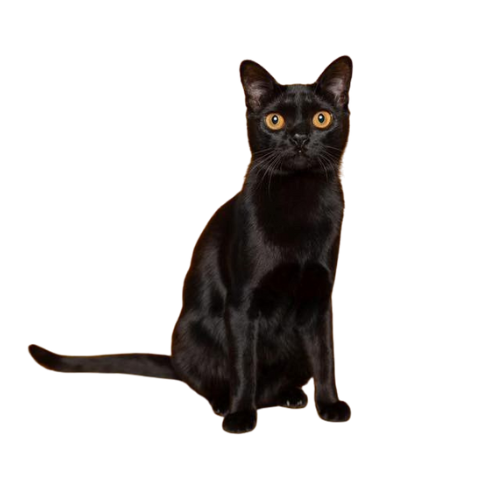
The Bombay is a medium-sized cat with a jet-black coat that shines like patent leather. The cat’s head is slightly domed, with rounded ears and a broad, blunt muzzle. The beautiful copper/gold eyes are set wide apart and are large and expressive. The body is strong and muscular with a straight back. The skin around the nose and eyes is black, and the paw pads are also black or dark brown.
The Bombay cat adapts well to a fast-paced lifestyle and usually gets along well with all members of the household. The Bombay cat typically combines the carefree temperament and vigorous nature of the American Shorthair with the sociable and curious lap-cat personality of the Burmese.
This cat is often described as a “cat-dog” because of its dog-like behavior. It enjoys walking on a leash and constantly follows its owners around the house. The Bombay is very intelligent and curious, which makes it easy to train.
This breed is very active and interested in everything. Their need for company means that they are unhappy when left alone. Therefore, if you are away from home for long periods during the day, consider getting another cat for company.
- Suitable for families, individuals, and seniors
- Gets along well with children and other pets when introduced gradually
- Does not tolerate long periods of solitude well – needs communication and attention
- A good indoor cat – does not necessarily need to go outside, but needs opportunities to play
- Generally a healthy and hardy breed, if bred responsibly.
- The coat requires little maintenance – occasional brushing keeps it shiny.
- Sensitive to cold – prefers warm environments
British Shorthair
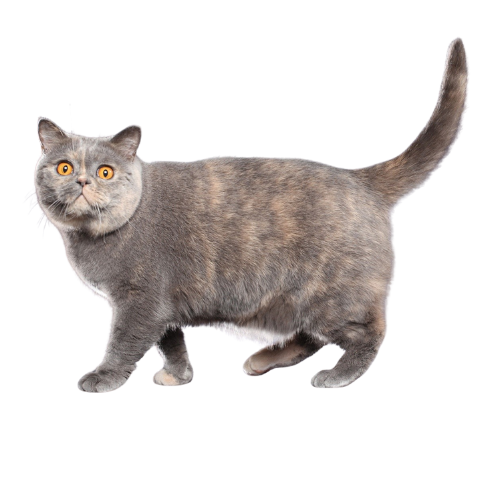
The British Shorthair has a very beautiful, dense coat, almost like plush. It is a large cat with a strong build, short, thick legs, a large round head, well-developed cheekbones, and regular, round ears set fairly far apart. Together with a broad chest and a short, thick tail, these features give the impression of a strong and sturdy cat. The coat is short and dense, not fluffy, and there are over a hundred possible color and pattern combinations. However, the most popular are the classic light blue cats.
“British Shorthairs” are sociable yet very independent cats that always maintain their dignified demeanor when interacting with people. They love to eat heartily and enjoy good food, and they tolerate cold weather well. The British Shorthair is the ideal household pet: they are in excellent health and do not require frequent grooming.
British cats are friendly, calm, patient, and very intelligent. They have a strong character and a moderate temperament. They usually choose one member of the household as their guardian, but since they are not aggressive, they are also suitable for homes with children.
He patiently tolerates being petted and stroked, although he occasionally needs some peace and space. He may not like being carried in someone’s arms. However, he stands out for his loyalty and enjoys spending time with his owner—often following him around like a dog.
- Calm and balanced, not intrusive
- Independent, but loves his family – does not demand attention, but appreciates company
- Good natured, gets along well with children and other animals
- Playful, but not overly active – more reserved than adventurous
- Generally a healthy breed, but genetic problems may occur (e.g., heart disease – HCM)
- Tendency to gain weight – requires a balanced diet and exercise
Cornish Rex
Kornreks have a muscular, slender, and sleek body. They appear heavier than they actually are. The cat has a long wedge-shaped head, a flat skull, and large erect ears. A distinctive feature of this breed is its fine, curly coat, which feels soft to the touch. There is no topcoat. The coat should be wavy. The whiskers are as curly as the body hair. Kornreks have a distinctive smell, which some owners describe as slightly cheesy. The coat can be any color or pattern.
The Cornish Rex is an extremely active and curious cat, often described as a kitten throughout its life. It is known for its sociability and affection towards humans, making it a loyal companion that loves to follow its owner everywhere.
Due to its intelligence, it is easy to train and can learn tricks like a dog. However, it has a tendency to bark frequently to express its needs and desires.
To keep your Cornish Rex happy, it is necessary to provide it with sufficient mental and physical stimulation.
Although generally hardy, the Cornish Rex can be susceptible to certain diseases. Progressive retinal atrophy and hypertrophic cardiomyopathy are two conditions that need to be monitored. Another disease common in this breed is hypotrichosis, or hair loss, which can lead to baldness. Unusual coat characteristics create conditions conducive to various skin-related health problems, including fungal infections.
Due to its curly coat, it is sensitive to low temperatures and drafts.
- Very active and playful – will remain a kitten for life
- Smart and curious – enjoys learning tricks and interactive toys
- Sociable and affectionate—loves being around people and often follows family members everywhere
- Gets along well with children and other animals when introduced properly
- Speaks moderately, generally with a pleasant and soft voice
- Suitable for active families or people who want a companion to play and socialize with
- Prefers to stay indoors, as its coat does not offer much protection against the cold.
- Needs lots of stimulation – toys, climbing frames, human contact
- Generally a healthy breed, but may be sensitive to temperature changes
- Hair care is minimal, but the skin needs to be cleaned from time to time (e.g., when grease accumulates).
- Ears need regular cleaning, as they can get dirtier
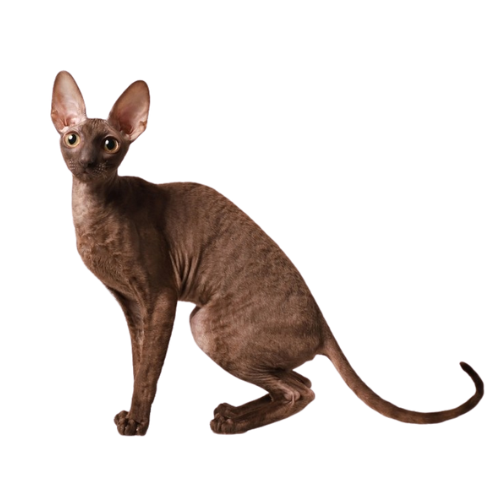
Devon Rex
Devon Rex cats have the soft, wavy coat characteristic of Rex cats, which forms curls and waves, especially on the back. This is why they are often considered to be the most hypoallergenic cats, but in fact they are not hypoallergenic.
Cats have three types of fur: top coat, undercoat, and middle coat, also known as guard hair. However, the Devon Rex’s coat is unusual because it has a short top coat.
The curls in the coat are caused by a genetic mutation. The whiskers and eyebrows are also curly. The Devon Rex coat can be any color or pattern.
Devons, which are medium-sized cats, are also called “fairy cats” or “alien cats” because of their unique and unusual appearance. Their unusually large, slightly rounded ears are set low on their broad heads, their eyes are large, and their noses are slightly upturned. They have a light build. Their long, sturdy legs are well suited for long jumps, and their paws are unusually large.
These are lively, extroverted cats. They have several dog-like tendencies, such as fetching thrown toys and walking on a leash. They are very affectionate and caring cats who do not like to be alone or bored.
Devonreks are affectionately referred to as “little terrorists” and “monkeys in cat’s clothing” because they can swing on curtains and climb up wallpaper.
- Very sociable and friendly, enjoys human company
- Intelligent and curious – often learns tricks or opens cupboards
- Often clings to its favorite person, enjoys being cuddled and warmth
- An excellent choice for families with children and homes with other animals
- Needs a lot of attention – not suited to being left alone for long periods of time
- The breed is generally healthy, but skin problems and thinning hair may occur.
- Requires occasional skin cleansing, as oily skin can accumulate dirt
- Külmakartlik – vajab soojas olemist, eriti talvel
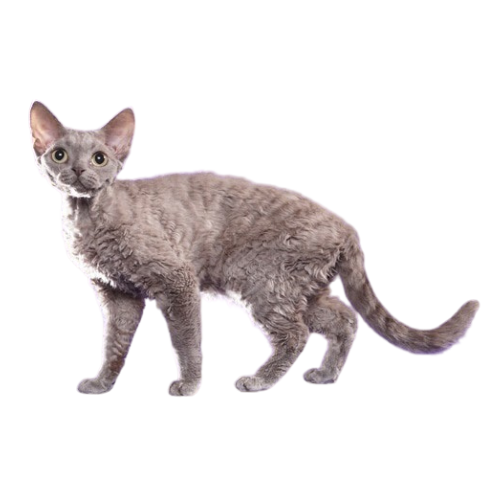
Doni Sfinks
The Donskoy Sphynx is a medium-sized cat with a muscular body, long legs and toes, and a head with large almond-shaped eyes. Their skin is soft and wrinkled, resembling human skin, and can come in a variety of colors and patterns.
Donskoi is active, very friendly, very intelligent, and very loving, loyal and devoted to its owners. Donskoi is good-natured, gentle, its coat is easy to care for, and it is easy to keep. They have a balanced temperament, a keen interest in their surroundings, and enjoy devising and playing games.
The Donskoi breed has four coat types in various color variations. These types are known as Rubber Bald, Flock, Velour, and Brush. The Donskoi has a dominant coat shedding gene, which causes the baby fur (if present) to fall out. All coat types except Brush are known to lose their fur either at birth or as they grow.
- Very sociable and loving towards people – often follows its owner around the house like a shadow.
- Very intelligent – can learn to open doors, use toys, even perform simple tricks
- Not suitable for those who are away from home a lot – loneliness can cause stress
- Also suitable for people with allergies, although not completely hypoallergenic
- Requires regular skin cleaning, as there is no hair to absorb body fat – if not washed, the skin may become black or greasy.
- The need to protect against sun and cold – skin can easily burn in the sun and be damaged by the cold
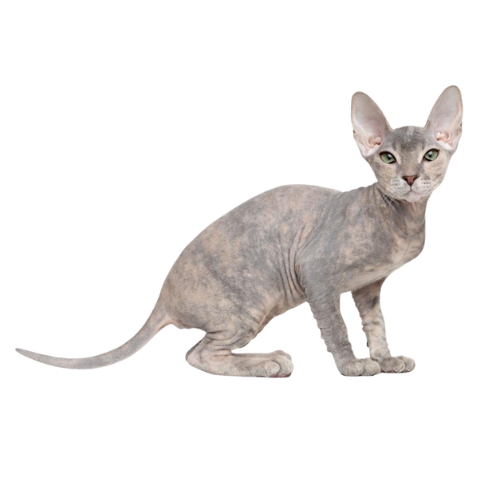
Egyptian Mau
The Egyptian Mau is an elegant and athletic cat with a distinctive spotted coat. The coat can come in a variety of base colors, such as bronze, silver, and black smoke, each offering a striking contrast with precisely defined black spots.
The Egyptian Mau’s head is medium-sized, slightly rounded, not too broad, with a moderately pointed muzzle that gives it a graceful and balanced appearance.
The Mau’s ears are medium-sized, broad at the base and set so as to give an impression of alertness and curiosity. They end in a sharp point, sometimes with small tufts of hair, similar to those of a lynx.
The Egyptian Mau’s eyes are one of its most captivating features. Large and almond-shaped, their color varies from green to turquoise and they are framed by black lines reminiscent of Egyptian makeup, emphasizing their lively and penetrating expression.
His body is slender and muscular, typical of athletic cats. The Egyptian Mau has a slightly arched back, which allows him to develop great speed and agility. He is longer than he is tall, giving him an elegant and powerful silhouette.
Lively and curious, the Egyptian Mau loves to explore its surroundings, whether indoors or in a safe outdoor area. This breed has a strong hunting instinct, which may be reflected in its play; it often prefers cat toys that stimulate its prey-hunting reflexes.
However, its energy and agility require daily play periods to stimulate it physically and mentally. Communication is a central aspect of the Egyptian Mau’s behavior. Known to be more vocal than other breeds, he does not hesitate to express his desires or discomforts through a variety of purrs, each with a different tone for different situations. These purrs can range from gentle coos to more demanding cries, especially when they want attention or food.
- Very intelligent and observant – recognizes his name, understands the emotions of family members
- May be cautious around strangers, but very loyal and devoted to their family
- Some Mau cats are talkative, but their voices are soft and have a “singing” tone
- Generally a healthy and hardy breed
- The coat requires minimal care – occasional brushing helps maintain shine and remove loose hair.
- Needs mental and physical stimulation – toys, climbing frames, window sills, etc.
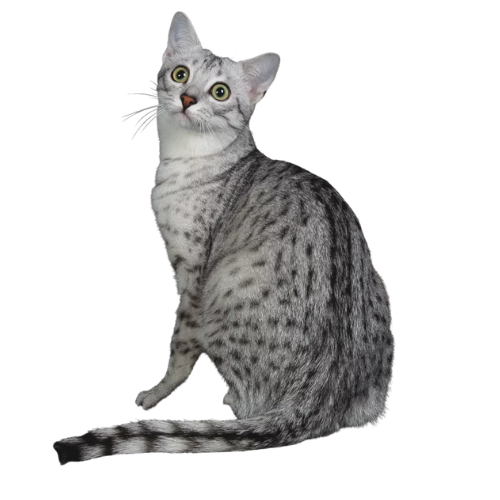
Elf
The Elf, a new and rare hybrid of the Sphynx and American Curl, is known for its hairless body and distinctive curled ears. These bright-eyed, muscular cats are very sociable and intelligent, and love to jump and play. Although the Elf does not need to be brushed, its care routine can be demanding, as the lack of fur requires a different approach.
Elf is a friendly and gentle cat with a good ability to adapt. They get along well with other animals. They are intelligent and playful and require quite a lot of attention, so Elf is best suited to people who can give them enough attention. These cats also love to climb high, so a stimulating play environment and high places to lie down are essential. It is recommended to give your cat 15 minutes of active playtime every day, but creating surfaces for independent climbing and jumping will also help them burn off some of their energy on their own.
Although Elfs have no fur, they need frequent bathing and brushing. Regular grooming is important to remove secretions (such as wax) from their skin. Otherwise, Elfs can become sticky or develop skin problems.
- Karva pole, kuid nahk vajab regulaarset hooldust: iganädalane pesu (eemaldamaks rasu ja mustust), kõrvade ja küünte puhastamine.
- Nahk on tundlik – vajab soojust talvel (nt riideid või sooje kohti) ja kaitset päikese eest suvel
- Possible problems: heart disease (e.g., hypertrophic cardiomyopathy), skin problems
- Suitable for people who want an active cat with a strong character
- For families who spend a lot of time at home and are ready to socialize
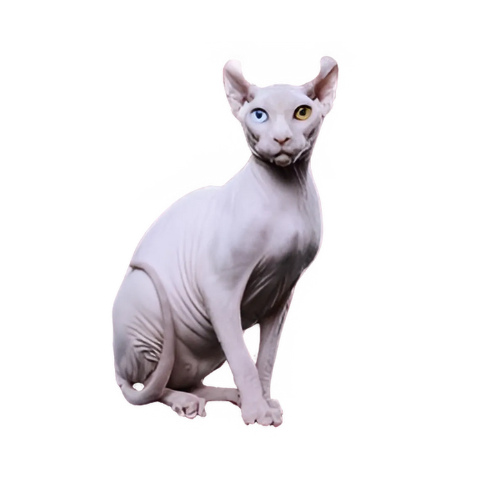
Exotic
The exotic shorthair cat is a medium-sized, stocky animal. The head is round and broad, with small ears set wide apart and a blunt muzzle. The bright eyes are large and round. The short, thick legs end in large, round paws with tufted toes. The tail is short and bushy. The coat is shorter, dense and abundant thanks to the thick and soft undercoat. Exotic Shorthair cats can come in all Persian cat colors and coat patterns, as well as spotted.
This breed likes routine and prefers a calm atmosphere and gentle care. They enjoy being combed and petted by children, but are unlikely to join in with boisterous games.
The exotic shorthair has a quiet, musical voice, but communicates mainly with its large, expressive eyes. They love secure ground and play enthusiastically with toys, but are just as happy lying in their favorite spot.
However, like any cat, Exotic retains its hunting instinct and is not afraid to climb bird or hamster cages when the opportunity arises.
- Very calm, balanced, and gentle in nature
- Friendly and sociable, but not intrusive – enjoys human company, but also respects distance
- Loves to play, but isn’t hyperactive – the ideal cat who enjoys a peaceful home
- Requires less grooming than a Persian cat, but regular brushing helps prevent hairballs.
- Due to a flat face, it may be necessary to clean the eyes and nose – tearing tends to occur.
- Genetic predisposition: Brachycephalic syndrome (a flat face can cause breathing difficulties). Polycystic kidney disease (PKD) – it is important to buy a cat from parents with a health check.
- Needs a balanced diet – tends to gain weight easily
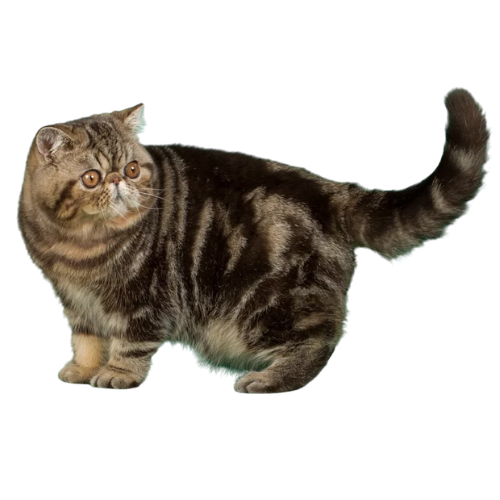
Kurilian Bobtail
When viewed from the front, the Kurilian Bobtail looks just like any other cat, but from behind—it’s a rabbit through and through! A tiny little tail, long hind legs.
Kurilian Bobtail cats can have short or semi-long hair, and they are very friendly, balanced, and peaceful in nature. They are healthy and very well-balanced, with a trusting and free-spirited personality.
The Kurilian Bobtail is an affectionate and playful cat. It is very attached to its owners, while at the same time being independent. This cat is intelligent, curious, and can be very active. It can also be calm and gentle. Due to its sociable nature, it gets along well with other animals and loves to play with children.
Unlike many other cats, it loves water and may even enjoy swimming. It is an excellent hunter and rarely aggressive. Its excellent sociability makes it an ideal companion for families.
Both the short-haired and semi-long-haired varieties should be brushed once a week—their fur doesn’t mat easily.
- A very healthy and hardy breed, as it has developed in the wild. There are no known serious genetic diseases characteristic of the breed.
- A short tail is a genetic trait and does not cause pain or problems – it complies with the breed standard and is healthy.
- For active people or families
- For those who want an intelligent but not overly demanding cat
- For people who like cats that are a little “dog-like”
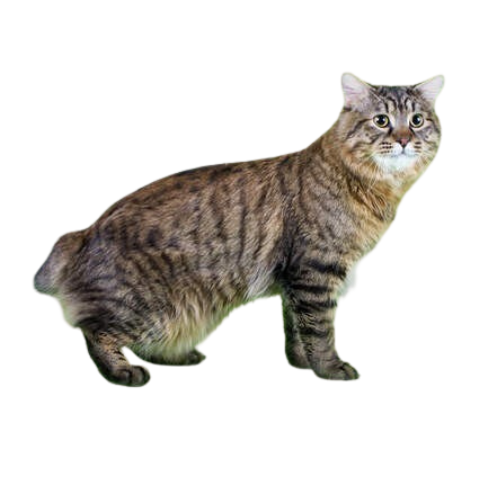
La Perm
LaPerm is characterized by curly, wavy fur and a friendly personality – it is calm and friendly, but sometimes also energetic and curious. This cat loves attention and likes to be close to its human companions. Although active and curious, this breed is also content to be a lap cat.
Thanks to his warm and loving nature, he gets along well with children and other family members, making him the ideal family companion.
This breed is genetically unique and is not related to any other rex cat breed. They have a dominant gene that causes their curly coat. They have an elegant and athletic build and are warm-hearted, active, and open in nature. They are considered hypoallergenic cats, causing significantly lower allergic reactions in humans than regular cats. Their most distinctive feature is their coat, which consists of soft waves, curls, and rings, resembling a messy perm.
- Surprisingly easy to groom – despite its curls, the coat does not mat and only needs occasional brushing.
- A breed with generally good health. As this is a natural mutation, there are no known major genetic diseases.
- Some LaPerm cats may shed more than others, but in general they are not heavy shedders.
- For families (including those with children)
- For those who want a companion, a lap cat
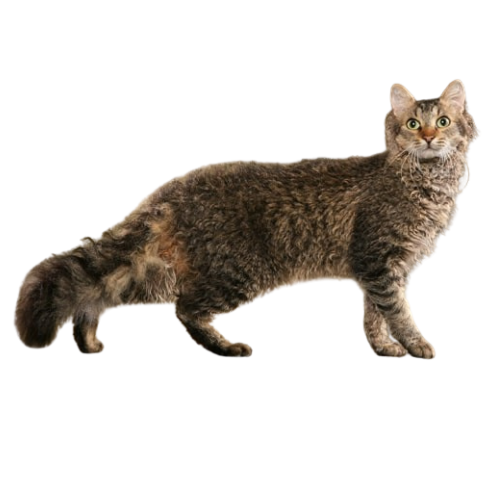
Lykoi
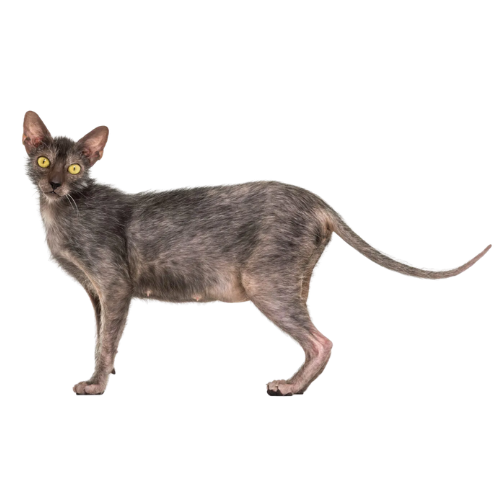
The Lykoi cat, often referred to as the “werewolf cat,” is one of the newest and most visually distinctive cat breeds in the world. Its partially hairless, “shaggy” appearance and dark coat, which gives it the appearance of a wild cat, is the result of a completely natural genetic mutation. But don’t be fooled by its appearance – the Lykoi is a friendly, playful, and loyal companion that is perfect for a loving home. They show great affection towards their owners.
Lykoids are not afraid to express themselves and have an extensive vocabulary of chirps, purrs, and of course meows to convey their thoughts and feelings, but they are not overly vocal unless they feel neglected.
Slender, muscular, and graceful, Lykoids have large, bright, almond-shaped eyes, large, high-set ears, a rounded muzzle, and a well-developed jaw. Their coat is a real eye-catcher, thanks to its unusual mixture of white and colored topcoat, sparse facial hair, and complete lack of undercoat. Although the coat looks rough, it is surprisingly soft and silky to the touch. Kittens are born with a coat that looks normal at birth, but after a week or two, the pattern becomes apparent. As the cat develops, it goes through a unique coat growth cycle, ranging from almost hairless to almost hairy.
- Need mental stimulation, very active and curious
- Maintenance is easy – there is no undercoat, so no tangles. Needs brushing from time to time.
- Some lykoi may temporarily or periodically lose a large portion of their fur, but this is characteristic of the breed and temporary.
- Generally good health, as the breed has developed as a natural mutation. The original Lykoi were thoroughly checked for diseases before breeding.
- Since part of their skin is hairless, they need protection from the sun and cold – they are better suited as indoor pets.
- They are sociable and suitable for families where there is a lot of communication.
Maine Coon
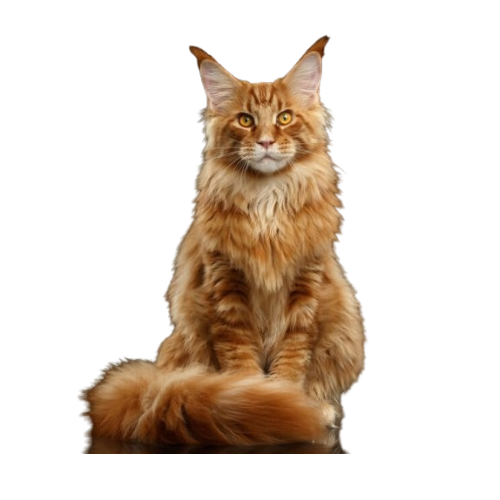
The Maine Coon is one of the largest cat breeds in the world. Males weigh 6-15 kg, females 5-11 kg. It has a powerful muscular body and sturdy paws. The cat’s head is characterized by a square muzzle and large, wide-set ears set high on the head. The coat is long and dense, consisting of an undercoat covered by a thick, shiny, waterproof topcoat. The coat is shorter on the head, neck, and shoulders and becomes longer on the back, sides, and tail. The fur on the belly and rear is fluffy and bushy. Behind the ears is a chest-adorned ruff, which is larger in males than in females. Maine Coons have long, flowing tails. There are tufts on the tips of the ears and between the toes, creating a snow boot effect. Maine Coon cats come in more than 30 color combinations. Their eyes are green, gold, or copper. White cats may have blue eyes or eyes of different colors.
Despite their feral appearance, Coons are very gentle cats. They have a charming, soft voice and a soft, purring motor. You rarely hear them meow loudly or demand attention.
They have a very sociable and adaptable temperament, getting along well with children and other pets, whether they’re dogs, cats, or guinea pigs. They aren’t pushy or clingy, but they follow their owner everywhere, always ready to lend a hand with anything important. The Maine Coon is an intelligent friend and a playful companion—not a capricious lap cat or a wild house bandit who turns your life upside down.
- Despite its length, the hair does not easily become tangled – brushing 1–2 times a week is sufficient.
- A strong breed, but some hereditary diseases may occur: Hypertrophic cardiomyopathy (HCM) – heart disease, hip dysplasia, spinal muscular atrophy (SMA) – rare
- Suitable for families, including those with small children
- For peaceful or active homes
- Suitable for other cats or dogs
Mekong Bobtail
The Mekong Bobtail is a very social and loyal cat. It is considered a very “dog-like” animal. The breed is calm, yet curious and active. It enjoys interaction but isn’t pushy. It also gets along well with other cats or even dogs, provided they are introduced properly.
The Mekong Bobtail is known as a very intelligent and balanced cat. This breed is not suitable for people with a fast-paced lifestyle. The Mekong wants closeness! This is a breed that will climb into your lap as soon as it can fit.
Mekong loves to talk; if you ask him something, you’re sure to get an answer.
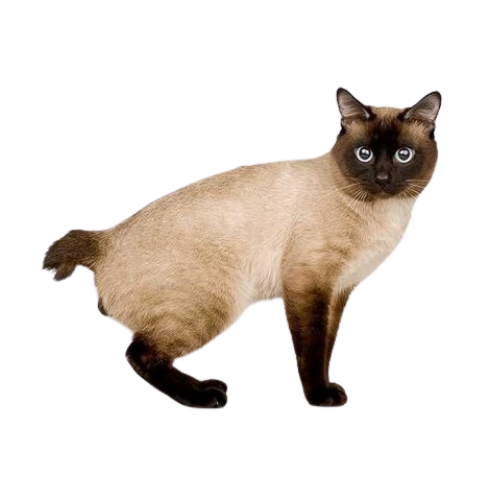
The Mekong Bobtail is a cat with an exotic appearance. The first features that immediately catch your eye are, of course, its short tail and color-point coat. The tail may have curves and kinks. The tail should be no shorter than three segments and no longer than a quarter of the body’s length.
The body is rectangular, medium-sized and muscular, but at the same time slender and elegant. Weight 3.6-4.5 kg. The back is almost straight, the rear is slightly higher than the shoulders. The legs are slender and of medium length, the paws are oval. The head has gently rounded contours. The top is slightly flat. The profile is convex.
The ears are large and wide. The eyes are large, oval, and almost straight. The eye color is intense blue. The coat is short, shiny, and dense. It has a silky but crisp texture. There is minimal undercoat. The coat of the Mekong Bobtail is often compared to a mink coat. All color-point colors are allowed, except white.
- A very clever and eager-to-learn cat
- Needs mental and physical stimulation – interactive toys and cat trees are suitable for him
- Generally a strong and healthy breed, as it has developed naturally. No serious genetic diseases are known to exist.
- Suitable for people who want an active and sociable cat
- Homes where people are often at home (he doesn’t like being alone for long periods of time)
- A favorite for those who want a cat that forms a strong bond with its owner.
Munchkin
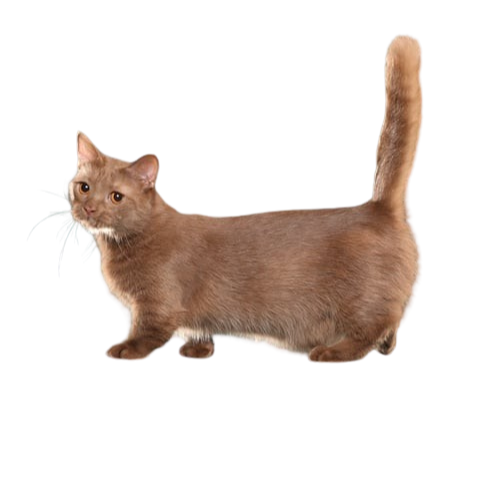
The Manchkin is a medium-sized cat with extremely short legs and a long back. The maximum height at the withers is 20 cm for females and 23 cm for males. These measurements are due to the size of its small legs, while the rest of its body has normal proportions. Females weigh between 2 and 3 kg, while males weigh between 3 and 4 kg. Its gait is compared to that of a badger, as it lacks the gracefulness of a typical long-legged cat. Manchkins have a stocky body and a rounded chest. Their coat can be either long or short, but in both cases it is plush, silky soft, and weather-resistant. Long-haired Munchkins have a bushy tail. Their coat can be any color or pattern, and their oval eyes can also be any color.
These sociable cats are very playful, they love to run and chase toys and play with them. They love company, including children, dogs, and other pets. When strangers visit their home, they are not shy, but curious and warm. It is affectionate and truly cuddly, needing attention from its owner.
They may not be able to jump from the floor to the bookshelf in one leap, but they demonstrate their jumping ability and intelligence by finding a way to get there in smaller steps.
- Highly intelligent and quick learners
- Love interactive toys and interacting with people
- Often play even in old age – remain youthful throughout their lives
- Moderate coat care – short-haired dogs should be brushed once a week, long-haired dogs a little more often.
- Generally a healthy breed, but genetic mutation results in a short spine and limbs – some experts are concerned about possible orthopedic problems (e.g., lordosis, or curvature of the spine).
- Suitable for families with children (very tolerant and playful)
- For people who want an active but not too demanding cat
Manx
The most distinctive feature of this cat is that it has no tail. This absence is due to a spontaneous genetic mutation. The Manx cat got its name from the Manx people, in whom this gene was discovered. It is the Manx gene that allows the spine to elongate to form a tail.
The head is broad, round, and with a very slight stop. The cheeks are larger in males. The eyes are large, round, and well set. The ears are round, small, and well set. The neck seems almost non-existent. The body is compact, muscular, and powerful. The back is short and forms an arch that ends in a rounded rump.
The Manx is a rather large cat. Its hind legs are longer than its front legs, giving it amazing jumping ability and great acceleration. Its coat is short, dense, and silky. It has a double undercoat. The coat stands up and opens when the cat turns its head. There is a medium-haired variant, the Cymric. All colors are accepted.
Although the Manx is characterized by the absence of a tail, there are four distinct categories of Manx cats. The Rumpy is completely tailless; the Rumpy Riser has a small tail with one to three vertebrae that is barely visible; the Stumpy has a tail three to four centimeters long; and the Tailed or Longy, found only in the United States, has a normal tail.
Manx cats are very calm and have high social intelligence. They are people-oriented cats that form strong bonds with their families. When properly introduced, they get along well with children and other pets. These balanced and calm cats love to share their affection and do not like to be left alone for long periods of time. If they are left home alone, consider getting them a companion cat. They are often called dog-cats because they can be very clingy.
- Requires regular brushing – medium-length hair in particular can easily become tangled
- The gene responsible for taillessness (the Manx mutation) can sometimes cause serious spinal and nerve problems, known as Manx syndrome. Typical problems include: coordination problems in the limbs, bladder or bowel control problems.
- Responsible breeders exclude carriers of disease from breeding
- Suitable for families (including those with small children).
- For single people who want a faithful companion
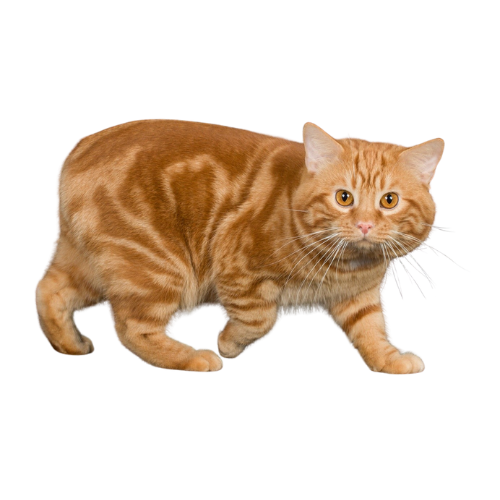
Neva Masquerade
Some cat registries classify the Neeva Masquerade as a colorpoint variant or subbreed of the Siberian cat, while others consider it a separate sister breed. Regardless of classification, all Neeva Masquerade cats are currently selectively bred and registered by all major cat breeding organizations under the name Siberian Cat or Neeva Masquerade. This means that all Neva Masquerade cats are purebred cats with officially registered ancestors.
Neeva Masquerade cats always have blue eyes, but the intensity of the blue may vary. The cat generally has a light coat: the head, legs, and tail feature darker solid or striped markings. Point colors include the following: black, blue, red, cream, tortoiseshell (tortie), and tortoiseshell-tabby (torbie), silver or smoke, and gold. These point markings may be mixed with any number of white patches. The coat is water-repellent.
The Neva Masquerade is known as an exceptionally agile jumper, a strong and powerful cat with strong hind legs and large, round paws. Their bushy tail is of medium length. Their body length varies from medium to large. Neva Masquerades have a firm, barrel-shaped torso and a stockier build than other cats. The overall impression of the body is circular and rounded.
Neeva masqueraders have a slightly curved back, as their hind legs are slightly longer than their front legs. This shape and the power of their hind legs contribute to their incredible agility and enable them to jump exceptionally high.
Neeva Masquerades develop quite slowly, reaching full maturity at around five years of age. Female Neeva Masquerades are considerably smaller than males. Adult cats weigh an average of 4.5–9 kg.
The Neva Masquerade is affectionate, calm, and very social. They form strong bonds with “their people,” a trait inherited from their Siamese ancestors. They may not like being petted or touched by strangers. In addition, these cats are curious, playful, and intelligent. They are also very friendly and have a gentle nature, which is an advantage if you have (small) children.
Despite their calm demeanor, Neeva Masquerades need stimulation. Regular playtime, teaching them to fetch things, and teaching them tricks are important.
Neeva’s masquerade also needs a suitable cat tree where large cats can climb and scratch.
- Friendly and balanced – a great family pet
- Smart and attentive – also suitable for first-time cat owners
- Playful, but not overly active – enjoys company, but does not need constant attention
- They are often described as “dog-like cats”
- Generally a healthy and hardy breed
- As the coat is long, it needs regular brushing (especially during the shedding season).
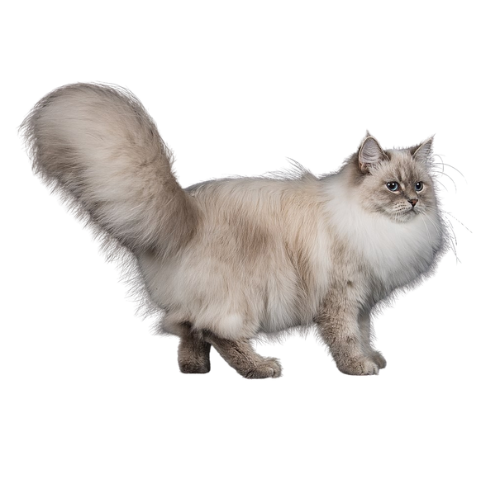
Norwegian Forest Cat
The Norwegian Forest Cat is a large, elegant breed with a semi-long coat; it matures slowly and may not reach full adulthood until its fourth year. The head is triangular in shape with a strong jawline. The profile is long and straight, with a smooth, unbroken line. The eyes are large and can be any color regardless of coat color. The Norwegian Forest Cat’s ears are set high on the head; they are broad at the base and taper toward the tips. The ears have tufts, and long hairs flow out from inside them. The body is long, muscular, strongly built, and has a solid bone structure. The Norwegian Forest Cat’s hind legs are longer than its front legs. There are tufts of fur between the toes. The Norwegian Forest Cat’s tail is bushy and long. When the tail is pulled forward along the cat’s body, it should reach the shoulders or even the neck. Their appearance changes with the seasons as they shed their thick undercoat. The outer layer of their coat is water-resistant. Males and some females develop a mane.
Norwegian Forest Cats love people and do not like to be left alone for long periods of time; they need attention. They are used to living outdoors and are adapted to roaming around outside, but they can also be content as indoor cats, provided they have enough space to move around. Cats are very intelligent, friendly, playful, and also very good companions.
Norwegian Forest Cats are gentle and well-mannered. Cats of this breed are loyal to their owners, get along well with dogs and small children, but are reserved in the presence of strangers. They remain playful throughout their lives. These cats have a well-developed hunting instinct.
- Independent but sociable – does not require constant attention but enjoys the company of family members
- Gets along well with children and other pets
- Very smart, quickly adapts to new environments
- Enjoys both mental games and physical activity
- The coat may seem high-maintenance, but in fact it only needs brushing 1–2 times a week – more often during the spring shedding season.
- Generally a very healthy and strong breed. Hereditary diseases may occur, such as: Hypertrophic cardiomyopathy (HCM), Glycogen storage disease type IV (rare but serious)
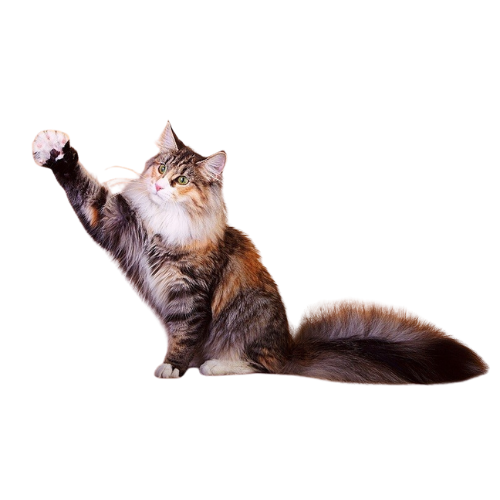
Ocicat
The Ocicat is a domestic cat breed that resembles a wild cat. The breed was developed from Siamese and Abyssinian cats, and later American Shorthair cats were also added.
Strong, medium to large Okids are so muscular that they seem heavy for their size, even the females. The spots are thumbprint-shaped, large, and form a dramatic contrast to the lighter background of the coat. Show-quality cats have a bull’s-eye pattern on both sides, surrounded by a patch surrounded by other spots. Other large spots appear on the shoulders, hind legs, and feet. This striking pattern comes in 12 different colors, ranging from light brown, chocolate, and cinnamon (the most common) to diluted and silver versions such as lavender silver and yellow silver. The head is modified wedge-shaped with a broad, clearly defined muzzle, giving the breed a wild appearance.
Ocicats are often described as cats with a dog-like personality; they are devoted to their owners but are neither clingy nor demanding. They are extroverted by nature, greet strangers (likely in the hope of finding new playmates), and respond well to training. Many of them fetch toys, walk on a leash, learn to respond to voice commands, and easily adapt to household rules; they are also excellent travelers. They do best in households with other pets or someone who works from home, as they do not do well when left alone for long periods of time.
Alert, agile, and athletic, Ocicats are energetic but not overly active. Compared to most long-haired breeds, they may seem wild, but their base activity level is lower than that of Abyssinian or Siamese cats. They enjoy interacting with people but do not crave it constantly; your Ocicat will vocalize to get your attention from time to time but will not be annoying about it. Overall, they make excellent companions and are suitable for almost any type of household.
- Very friendly and social – well suited to families with other pets or children
- Very intelligent – learns tricks easily and can even walk on a leash
- Loves being around people—is not a lone wolf
- Very active – needs mental and physical stimulation
- Generally a healthy breed, but like all cats, some genetic diseases (e.g., heart problems) may occur.
- For people who want an active, intelligent, and sociable cat
- Well suited for active families or people who spend a lot of time at home.
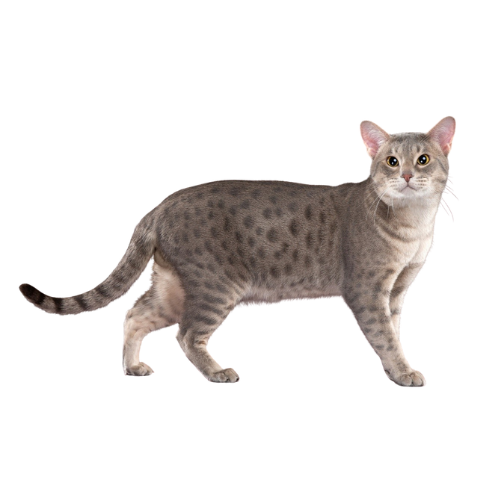
Oriental
Orientals are of medium height, but considerably heavier than their appearance would suggest. Their body is similar to that of a Siamese cat: long, slender, with a whip-like tail and slender legs. The head is triangular, wedge-shaped, with a straight profile. The ears are large and set wide apart. The Oriental’s coat is very short and close-fitting. The fur is fine and shiny.
Oriental cats come in a wide variety of colors and patterns. With more than 600 possible combinations of color, pattern, and coat length, this breed is one of the most unique in the cat world.
Like the Siamese cat, the Oriental is an intelligent and curious animal that knows how to attract attention. It likes to “talk” to people and expects to receive a response. They want to feel like part of the family and enjoy playing, for example, catching a ball of crumpled paper. Oriental cats like to be entertained. They don’t like to be alone. If you are at work all day, you should consider getting another Oriental cat. If left alone and bored, they may start vocalizing or destroying things – this is not a cat that should be left alone for days on end.
- Highly intelligent and curious
- Talkative – constantly communicate with their owners (like Siamese cats)
- Very social – need a lot of attention and company
- For families and people who are often at home and enjoy active interaction with their cat
- Coat care is easy – all you need to do is brush it occasionally.
- Needs mental and physical stimulation: games, climbing frames, social interaction
- Orientals are generally healthy, but there are some hereditary health risks: heart problems (e.g., hypertrophic cardiomyopathy), dental problems, sometimes hearing problems (especially in white individuals).
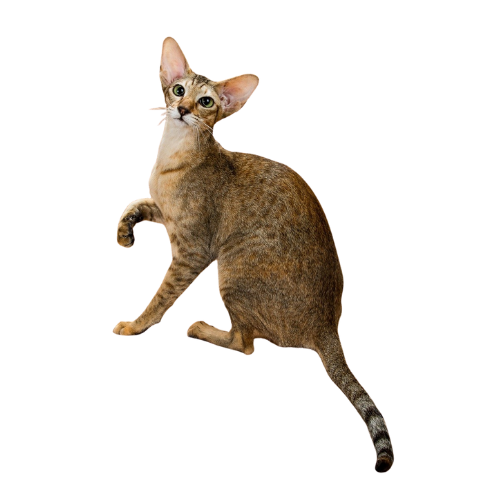
Peterbald
The Peterbald was bred by crossing the Donskoy and the Oriental, combining the hairless gene with the gracefulness of Oriental cats.
The hairless sphinx—the Peterbald—also belongs to the same group. These graceful cats have longer bodies and limbs than usual. An elongated muzzle, blue or green oriental-style eyes, large ears, nimble paws, a long, agile tail, and a beautiful, exotic oriental coat—all of this makes the Peterbald’s appearance unique and easily recognizable.
Peterbalds are very attached to people and love to be held. These cats come in three coat types: completely short-haired, fine “peach-like,” or longer-haired, which feels like lush, short velvet. They get along very well with other cats, dogs, and children, as they tend to be playful.
Peterbalds are very talkative and expressive, able to communicate their needs and feelings through various meows and affectionate gestures. They are extremely curious, thoroughly exploring every corner of their environment and happily participating in games. His lively and temperamental nature can sometimes make him a little possessive and demanding of attention. However, this sincere and energetic character promotes the formation of a strong bond with its owner. The Peterbald is perfectly suited to an active home and adapts well to both apartment and house living, provided that its social needs are met.
Peterbalds are generally healthy, but as they are a relatively new breed, certain potential genetic problems are monitored: dental problems, sensitive skin (irritations, allergies), thermoregulation difficulties (due to their coat).
- Since cats don’t have fur, oil builds up on their skin—it’s necessary to clean their skin from time to time with a damp cloth or lukewarm water
- Needs to be kept warm—ideal as a house cat; in cold weather, it needs clothes or a warm bed
- Protect from direct sunlight
- Ear and nail care – wax accumulates more easily
- Suitable for families (including children) as it is peaceful and sociable
- People who are often at home do not tolerate loneliness well.
- For those looking for closer interaction with their cat (somewhat similar to a dog)
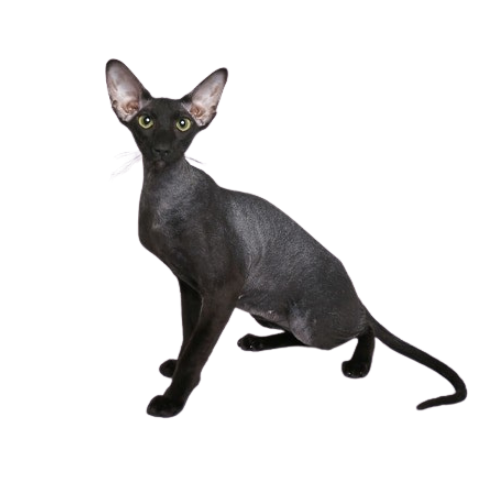
Persian
The Persian cat is an extremely charming pet. Its super-soft coat, large lion-like paws, and gentle meow make it a very appealing cat. The breed is unmistakably calm and does not like change at all. The Persian is a domestic cat in every conceivable way and form.
Persian cats are medium-sized, stocky animals. They have long fur with a thick undercoat, which needs to be cared for by humans, as the cat cannot do it itself. Persian cats can have coats in many different colors and variations. Persian cats have flat, round faces. Their muzzle is shortened and their ears are small and set far apart.
Persian cats are gentle by nature. They like to play, but they are not too noisy. Persian cats are well suited as the only pet in a family, but they usually get along well with other pets in the family. They are very loyal to their owner and enjoy attention from family members. They are not big climbers, preferring to lounge in an elegant pose on their favorite spot on the windowsill or armchair rather than climb on the flower table. They add character and coziness to your interior, like an antique piece of furniture or a valuable painting. Persian cats adapt very well and are loyal companions. As a well-developed cat, they bring their owners a lot of joy, improving their mood and making their days more beautiful.
Persian cats are more susceptible to certain health problems due to breeding: breathing difficulties (especially in the flat-faced variety), polycystic kidney disease (PKD) – testable and preventable through responsible breeding, dental and eye problems.
- Daily brushing is necessary to prevent matted fur.
- Regular bathing if necessary
- Eyes may produce tears
- Very gentle and quiet – not pushy, but deeply devoted to his people
- Not very active, prefers napping, petting, and a calm environment
- Gets along well with children and other calm animals when treated with respect
- A peaceful and quiet home
- For single people or families who want a loving and peaceful companion
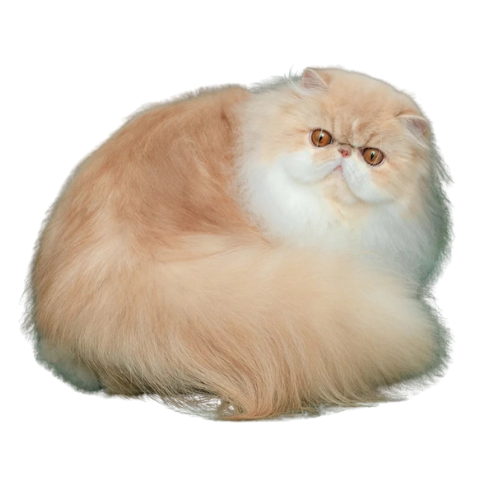
Ragdoll
The impressive-looking ragdoll is one of the largest domestic cat breeds – adults can grow up to 53 cm long and weigh up to 9 kg. It has a strong body and sturdy legs. Its eyes are large, oval, and blue. The ragdoll’s coat is silky and longer on the belly, neck, and hind legs than elsewhere. Its coat does not have a dense undercoat, which is said to be the reason why it does not shed much.
Adult cats must have a fluffy neck and trousers. Ragdoll coats usually come in three patterns: mask, where the face, ears, tail, and legs are darker than the rest of the body; white-pawed, which resembles a mask, but with light paws and tail; and two-colored, where most of the coat is light and the dark face has a white triangle of fur. There is also a white-pawed ragdoll.
Ragdolls are very friendly with people and like to follow their owners around. They are curious and enjoy participating in all kinds of activities, while also keeping a close eye on their surroundings. They easily adapt to their owner’s habits. Ragdolls like to greet their owners at the door and jump into their arms whenever possible. They feel most comfortable in a room where they can lie on the sofa or a chair. Cats of this breed are not particularly fond of climbing and are happy to stay at the same level as their humans. Ragdolls are not very vocal and simply meow to remind you when it’s feeding time or to express their desire to be petted. When picked up, they go completely limp, like a rag doll.
Since ragdolls are quite intelligent, they need mental stimulation to stay happy and in top shape. Ragdolls enjoy playing with toys. As it is a large breed, it needs a large litter box and a sturdy, tall scratching post. Keep in mind that since the Ragdoll is not a big fan of heights and climbing, it does not need a tall climbing tree. The Ragdoll is usually kept as an indoor cat, as it does not enjoy going outside very much.
- They are calm and gentle, making them perfect for children and other pets.
- Brushing 2–3 times a week keeps the coat silky and tangle-free.
- The breed is generally healthy, but some genetic risks may be present: Hypertrophic cardiomyopathy (HCM) – a heart condition that should be tested for genetically. Joint problems or obesity
- Suitable for families, including those with children—he is patient and calm.
- For single people looking for a loyal and friendly companion
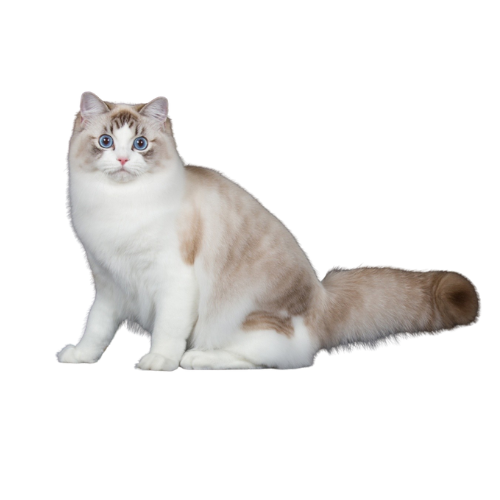
Savannah
Savannah is the largest domestic cat and closely resembles a very small leopard or its ancestor, the serval. It is a hybrid of a serval, a wildcat, and a domestic cat.
This is an elegant, proud, graceful cat. Its distinctive coat and size make it an impressive cat. It has an athletic, strong, slender body.
Its head is quite small in comparison to the rest of its body. It has a triangular shape, longer than it is wide. The muzzle is short. The large ears, broad at the base, are set high on the head. Their tips are slightly rounded. The eyes are very large, almond-shaped, and green or gold. However, all eye colors are permitted, regardless of coat color. Most Savannahs have a black “tear” under each eye.
The coat is short, soft, and silky. It is often hypoallergenic. The coat is distinctive, ranging in color from golden to brown with black spots of varying shapes. The belly is lighter in color. The tail is thick, fairly short, curled, and black at the tip.
The first generations of the Savannah, F1 and F2, paved the way for the fifth generation, or F5. Starting with F5, LOOF recognizes the Savannah. Its temperament is determined by both socialization and generation. First- and second-generation cats are not suitable for living with children and are very wary of strangers. The further a Savannah cat is from the F1 generation, the more adaptable, confident, and playful it is, and the better suited it is as a household companion.
Savannah is a very energetic cat who does not spend most of her time sleeping. She definitely needs space to physically expend her energy. Because she is very large and intelligent, she can learn to fetch things like a dog. However, she retains her specific cat personality. When Savannah is bored, she can quickly damage her environment or meow constantly.
- F1–F3 generations (first crossbreeds): more wild in nature, larger, require an experienced owner
- F4 and beyond: more homely, more adaptable, playful and sociable
- Savannah is a very intelligent and active cat who requires mental and physical stimulation.
- Active homes where people are ready to deal with a smart and energetic cat
- For experienced cat owners, especially those with F1–F3 cats
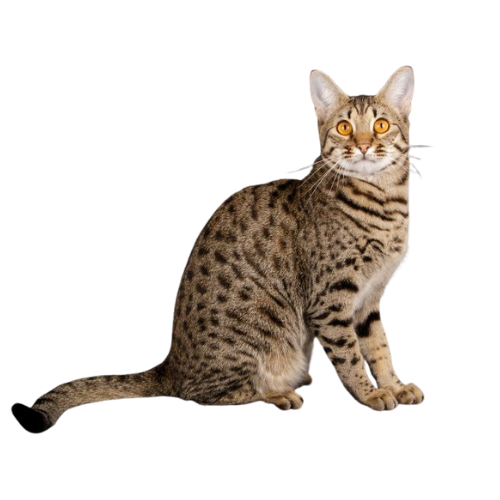
Scottish Fold/ Scottish Straight
Scottish Fold and Scottish Straight are closely related cat breeds, united by their gentle nature, rounded physique, and affectionate disposition. The main difference between them is the shape of their ears: Fold cats have characteristic “folded” ears, while Straight cats have ears that are straight like those of a normal cat. Both breeds are loved for their balanced temperament and cute appearance.
Scottish cats have round heads and strong jaws. Their eyes are round and large. The color of their eyes, nose leather, and paw pads must be in harmony with their coat color. Their noses are short and slightly arched. They have a round muzzle and round cheeks. Scottish Folds are medium-sized, muscular cats. They have massive shoulders and a stocky body. The tail of a Scottish Fold must be completely flexible. A stiff tail is a genetic defect and the cat is not suitable for breeding. The tail is of medium length. Short legs. Scottish cats have both short and long hair. Dense coat and undercoat, which keeps the coat away from the body and airy. The coat should not give the impression of being woolly. Scottish Folds come in all colors and many patterns.
Shorthairs are cats with a unique character. This is precisely why they are so highly valued and different from other breeds. They are quiet, enjoy human company immensely, and express this on a daily basis. They are also very adaptable – they are not bothered by noisy children, other pets running around, new places, or people. They are the ideal choice for families with children. They also take shows quite calmly; a new exhibition hall or hotel room does not stress them out at all. Scottish Folds are a very affectionate breed and crave closeness. Scottish Folds are generally very independent cats. They are well suited to people with a fast-paced lifestyle, but when you are around, they will not hide their love for you. It is perfectly normal for your cat to wake you up in the morning, bring you toys, or simply come and cuddle up in your lap.
- Affectionate but not intrusive – they enjoy closeness but also value their own space.
- Good with kids and other animals
- Playful, but not overly active
- Both breeds may suffer from heart and joint problems, as do many purebred dogs.
- Suitable for all types of families – with children, older people, or single owners
- For those who appreciate a calm, sweet, and balanced companion
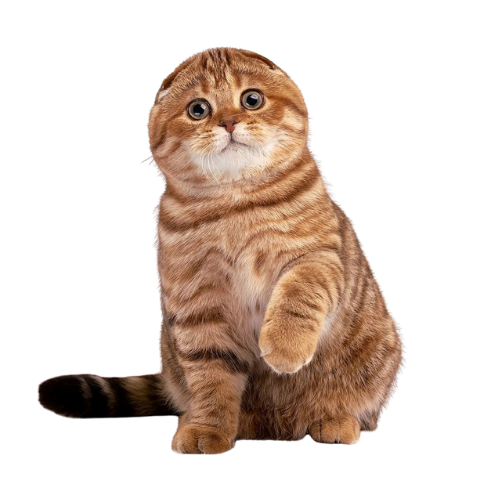
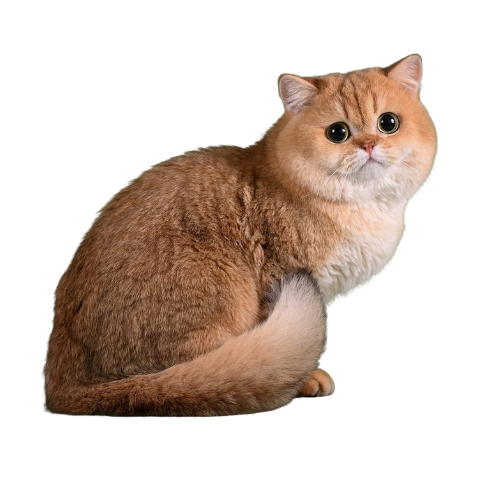
Sealkirk Rex
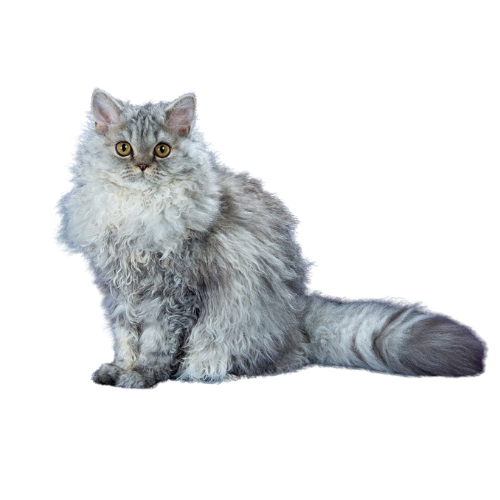
The Selkirk Rex is one of the most unique cat breeds in the world—known for its soft, curly coat and friendly, calm temperament. Unlike other Rex breeds (such as the Devon Rex and Cornish Rex), the Selkirk Rex has a dense, tightly curled coat that covers its entire body—giving it an unforgettable “teddy bear” appearance.
The Selkirk Rex is a medium to large cat whose strong and sturdy build gives it a surprising weight and powerful appearance. The breed is characterized by a round head and a short, broad muzzle.
The Selkirk Rex can have either short or long hair. What makes it special, however, is its three-layered coat – consisting of an outer coat, undercoat, and down coat – where all hair types are wavy or curly, giving the coat a fluffy and soft texture.
The curliness of the coat can vary depending on age, gender, climate, and even the season. Long-haired individuals have tufts on their tails that extend beyond the tail, while their faces are framed by longer whiskers that emphasize their expressive appearance.
The Selkirk Rex can come in all coat colors and patterns.
With their sweet temperament, Selkirk Rexes make wonderful family pets. Bred from British Shorthairs, Persians, and Exotics, the breed’s genetic background is reflected in its personality traits—they are affectionate, patient, playful, alert, and intelligent, and are tolerant of respectful children and other pets. They love human companionship and cuddles.
The Selkirk Rex’s coat requires quite a bit of grooming (especially the long-haired variety), as they shed and need daily brushing with a wide-toothed comb to remove loose hair and prevent matting. Some cats (like all Rex breeds) may be prone to oily coats and need to be bathed from time to time.
- Very friendly and loving, gets along well with children and other pets
- Patient and calm, not overly noisy or active
- Grooming depends on coat length – short-haired dogs should be brushed 1–2 times a week, long-haired dogs more often.
- The Selkirk Rex is generally a healthy breed, but because British Shorthairs, Exotics, and Persians have been used in its breeding, some hereditary diseases may occur: Polycystic kidney disease (PKD) – inherited from the Persian line, hypertrophic cardiomyopathy (HCM), sensitive skin or ear problems
- Suitable for families, including children and other pets
- For single people looking for a loving and peaceful partner
Siamese
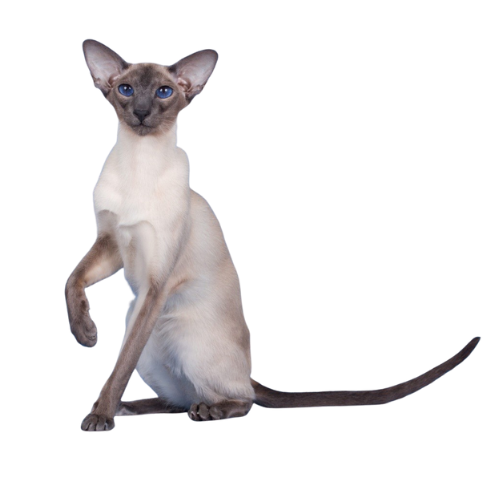
Siamese cats are very agile, active cats with slender bodies. Siamese cats can have either short or long hair. They are very agile, long-lived, have blue eyes and good hearing.
According to modern breeding standards, they have an elegant, slender, agile, and muscular body. Their head is triangular with a fine nose. Their eyes are almond-shaped and slanted, and their ears are large and thin. They have a long neck, body, and tail. Their coat is short, shiny, fine, and soft, and close to the body. Siamese cats are characterized by different colored body parts.
The colors of the mask are the colors of the face, ears, tail, and paws. Siamese cats come in the following mask colors: black, chocolate, blue, lilac, cinnamon, light brown, red, cream, apricot, or caramel. Masks can also be tortoiseshell and striped.
Siamese cats are very intelligent, lively, and playful cats. They can be very demanding and interfere completely in their owner’s life. They do not like to be ignored and always need to be the center of attention.
They enjoy being around people and can often form strong bonds with one person. They also like attention and interaction. In fact, in some ways, the Siamese cat’s temperament is more like that of a dog.
This cat breed’s meow is distinctive, sharper than that of other domestic cats. It does not tolerate loneliness, can be moody, and may act capriciously. If it senses that its owner is in danger, a Siamese cat may attack.
It is very intelligent—it comes when called (if it feels like it…) and quickly understands when something is off-limits. Since it is playful and full of energy, it can be taught various tricks.
- Very talkative – communicates with various meows and vocalizations
- Affectionate and loyal, often prefers one specific person
- Intelligent and quick learner
- Playful and active, needs mental stimulation
- Does not tolerate loneliness – needs either a companion (cat or human) or lots of attention
- Siamese cats are generally healthy and long-lived, but some hereditary diseases may occur: respiratory sensitivity, eye and gum problems. Some lines may be prone to heart disease or amyloidosis.
- For people who want a sociable and active cat
- Families where cats are not left alone for long periods of time
- For experienced owners who can provide mental stimulation
Siberian
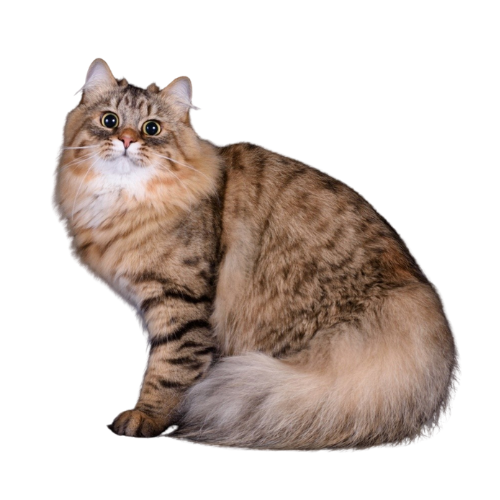
It is said that the Siberian cat is a medium-sized cat, but in reality they are actually quite large, since they are often compared to American Maine Coons (known to be the world’s largest cat breed) and the Norwegian Forest Cat. Siberians typically weigh between 4.5 and 9 kilograms. Males are significantly larger than females.
Siberian cats only reach adulthood at 4-5 years of age, at which point their appearance is finally “complete.” Siberian cats have broad heads that are slightly longer than they are wide, melon-shaped, and quite massive. Their cheeks are broad and fluffy. Their noses are flat and their profiles are soft, without sharp jaws. The eyes are large and elongated. All eye colors are allowed, with green being preferred. The ears are medium-sized and rounded. There is a lot of hair inside the ears, and there may be tufts at the tips. The ears are set quite far apart and point forward. They are muscular, with a strong bone structure and a broad chest. The legs are of medium length, the paws are large and round, with tufts between the toes. The tail is of medium length, thick and bushy, with a rounded tip. The tail is covered with dense fur, but there should be no hanging hairs. The three-layered coat is of medium length, thick and dense. The undercoat is dense and slightly upright, keeping the cat warm in all weather conditions, while the topcoat is slightly “oily” and water-repellent.
A raincoat extends from the center of the back, consisting of long, smooth hair, the purpose of which is to keep the undercoat dry. Their winter coat is particularly impressive, highlighting the cat’s neck and “underpants,” and the tail is almost as wide as the rump. The summer coat is significantly shorter than the winter coat. Grooming is relatively easy, but it is worth brushing with a comb every week, and during the shedding season, it is worth brushing every day. The most common patterns for Siberian cats are tiger and tortoiseshell, and the most popular colors are red, brown, blue, and black, sometimes with white. It is also important to know that Siberian cats are considered a hypoallergenic breed. However, this is not a guarantee – each person must test their personal reaction.
In addition, there is also a masked variety bred from the Siberian cat—the Neeva Masquerade. The masks can be brown, blue, red, etc. The Neeva Masquerade always has blue eyes. Some cat registries classify the Neeva Masquerade as a colorpoint variant or sub-breed of the Siberian cat, while others consider it a separate sister breed. Regardless of classification, all Neeva Masquerade cats are currently selectively bred and registered by all major cat breeding organizations under the name Siberian or Neeva Masquerade.
Siberian cats are noble, warm-hearted, cheerful, curious, clever, energetic, and active by nature. They are playful, but sometimes a little sensitive, and they are definitely friendly and sincerely attached to their owners. Siberian wildcats are intelligent and seem to be able to solve problems to get what they want. They like to play with water, both in a bowl and under a dripping kitchen tap. They are well suited to families with children and also like all other animals. Siberians are sometimes compared to dogs in terms of both size and intelligence. Since Siberian cats are active, they need quite a lot of space. They are excellent climbers and jumpers. They “talk” a lot. However, their voice is not loud, but rather soft. In addition to purring, they also surprise people with their squeaking and chirping.
- Very social and sociable, attached to family members
- Intelligent and curious, enjoys playing and solving problems
- Moderately talkative, soft-spoken communicator
- Brush 1–2 times a week, hair does not shed easily
- During the shedding season (spring, fall), more frequent grooming may be necessary.
- The Siberian cat is a strong and resilient breed, but as with any purebred cat, certain genetic risks should be monitored: Hypertrophic cardiomyopathy (HCM)
Somali
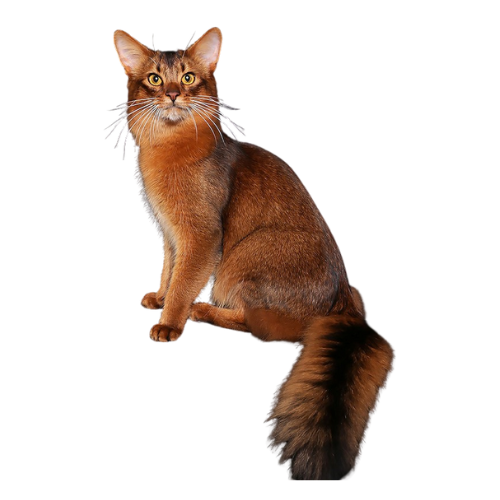
This is a long-haired variant of the Abyssinian cat. The coat is not as long as that of other cats in this category, but it is distinctly striped (each hair has two or three stripes of color), giving the animal a particularly striking appearance. Somali cats have relatively large ears – a trait often found in cats that originate from hot climates, where it is necessary to dissipate body heat. Like the Abyssinian cat, the Somali cat is intelligent, quite demanding, and people-oriented. Although it looks like a wild cat, it likes to be indoors and enjoy the comforts of home.
These medium-sized cats are muscular, with silky fur, medium-length hair, and colorful coats. Each hair has several color bands, creating a shimmering and wild look that is truly breathtaking on a well-groomed cat. The coat is longer around the belly and neck and reaches its maximum length on the tail. Their head is wedge-shaped, slightly rounded and with delicate contours – large, spreading ears and expressive almond-shaped eyes complement their appearance. Eye color can range from intense green to rich copper.
Somali cats are very intelligent and active, and their playfulness can sometimes tire their owners. In addition, they are also very friendly cats. Many Somali cats like to be thrown a toy, which they then bring back to their owner, just like dogs do. They really enjoy human attention. Although they are very affectionate and become very attached to their owners, they are not exactly lap cats – Somalis prefer affection on their own terms and active interaction rather than sitting still and being petted.
Somali cats are extremely resourceful and will find ways to entertain themselves even when left unsupervised or without mental stimulation for extended periods. Climbing on curtains, exploring the contents of the refrigerator, or knocking trinkets off shelves are just a few of the “adventures” they enjoy.
- Active and playful – Somali cats need lots of activity and mental stimulation
- Intelligent and curious – enjoys learning, interactive games, and puzzles
- Sociable and loyal—strongly attached to its people; often follows them everywhere. Its coat doesn’t mat very easily, but it needs regular brushing (1–2 times a week)
- The breed is generally healthy, but in rare cases hereditary diseases such as PKD (polycystic kidney disease) or gingivitis may occur.
Sphinx
The distinctive feature of the Sphynx is its lack of fur. However, this cat is not completely hairless – its skin is covered with soft downy hairs that feel like peach skin to the touch. The cat also has no whiskers or eyelashes. It has a wedge-shaped head, almond-shaped eyes, and large ears. Its body is slender but muscular. Its chest is barrel-shaped. This makes its long, slender legs appear to be bowed. Its paw pads are thicker than those of other cats, giving the impression that it is walking on cushions. Its long, tapered, whip-like tail feels hard to the touch. These cats are so warm and soft that they are called “hot water bottles made of fur.” The skin is generally smooth on the head, body, and legs, but may be wrinkled in places and must be tight elsewhere. Pigment spots are clearly visible on the skin of a Sphynx. All skin patterns and colors are permitted.
The Sphynx is friendly, mischievous, people-oriented, and loves attention. This talkative cat often greets its owner at the door. It is one of the most dog-like cat breeds. The Sphynx is very intelligent, playful, and affectionate. The Sphynx is also a master purrer. They like to sleep under the covers with their owner. Since the Sphynx’s body temperature is 1-2 degrees higher than that of a normal cat, they have a voracious appetite because they need to compensate for their heat loss. Being completely unprotected from bad weather, these cats should not be left outside in the cold! They also dislike sitting on cold surfaces, but they absolutely adore central heating. When outside in sunny weather, Sphynx cats may need sunscreen on their pale skin areas.
Sphinx skin is known for its excessive oil production, which often causes a sticky, dark brown or reddish-brown layer to accumulate, requiring regular cleaning. In addition, Sphynxes typically produce more earwax than most hairy domestic cats. This increased wax production is due to minimal or no hair in the ears, which allows dirt, skin oils (sebum), and earwax to accumulate, requiring frequent cleaning. In addition, due to their lack of hair, oil and debris often accumulate under their nails and in their numerous skin folds. Regular care of these areas, including nails and skin folds, is essential for the health and hygiene of the breed.
- Sphynx cats are known for being extremely social, friendly, and active cats.
- Human-loving: They crave closeness and warmth—they often climb into your lap, under a blanket, or into the sun
- Smart and eager to learn: They learn tricks, enjoy toys, and love getting attention from people
- Often “dog-like”—they follow their owners and may even walk on a leash
- Requires regular care: Skin care, cleaning ears and nails, keeping warm
- The breed is generally healthy, but there are certain hereditary diseases, such as: Hypertrophic cardiomyopathy (heart disease), skin problems if hygiene is not maintained
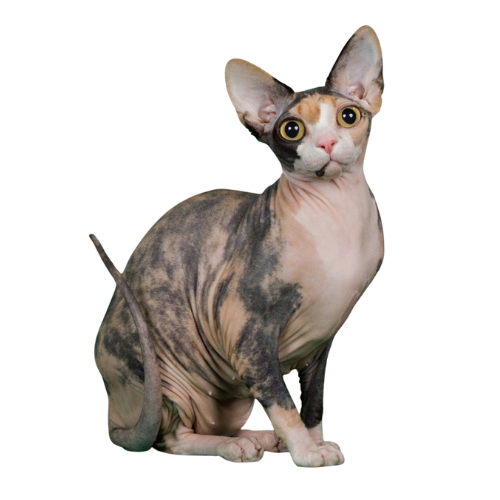
Singapura
The Singaporean is the smallest dog breed in the world. It is known for its liveliness and remarkable agility. Although small in size, it expresses surprising strength in its movements, combining elegance and dynamism. This four-legged companion, with a friendly and curious nature, is highly intelligent and adapts easily to its environment. Its short, almost self-grooming coat makes it a preferred choice for those looking for a cat that is easy to care for. In addition, the Singapura is strong and resilient, usually free of hereditary diseases, making it an excellent companion for families and cat lovers.
Singapura looks like a small Abyssinian cat. Its roundness is accentuated by prominent whisker pads and a broad, blunt muzzle. Its large ears are also deeply curved. Its large almond-shaped eyes are slightly slanted and wide open. Although it is a small cat, its body is sturdy and muscular. Its slender tail ends in a blunt tip. Its coat is short, smooth, and without undercoat. Each hair has a black, brown, or ivory stripe. The only official color is warm-toned sepia agouti – an ivory base with chocolate brown shading. The back, tail, and legs are covered with darker fur. The black-rimmed eyes are hazel, green, or yellow.
Singapuras love human company and may happily sit on their owner’s lap or shoulder to keep warm. They like to be above ground level and often climb to places with a good view, such as bookshelves or the top of a wardrobe. Singapuras are hyperactive, lively, and always ready to play. These curious cats learn quickly and love to get into mischief.
- Singapura is also a rather vocal breed, and if it gets bored at home, you will hear about it before you see it – it needs stimulation.
- The world’s smallest cat breed – females often weigh only 2–3 kg, males up to 4 kg
- Friendly and sociable: Very social, enjoys being around people and is strongly attached to its owner.
- Very playful: Loves climbing, toys, and interacting with others—often “chats” with soft sounds
- The breed is generally healthy, but there is a genetic condition called PKdef (hereditary hemolytic anemia).
- For those looking for a small but active and social cat
- For people who want a close bond with their pet
- For families where cats don’t have to be alone for long periods of time
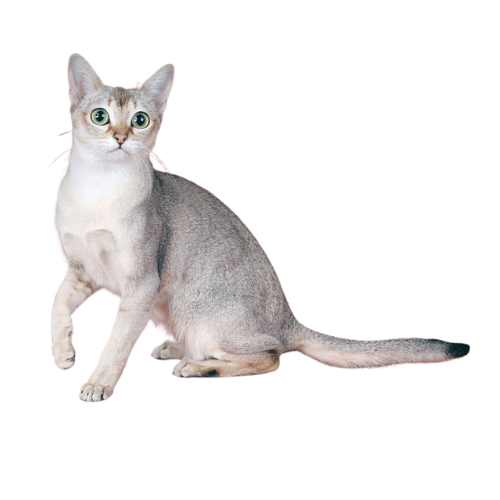
Thai
Unlike the Siamese cat, the Thai cat has a gentler and more natural appearance and balanced proportions. Its elegant body is medium to large in size, strong and muscular. Females weigh 3–4 kg and males 4–6.5 kg. The legs are relatively long in comparison to the body. The head is round with large eyes. The medium-sized ears are set wide apart. The coat is short with minimal undercoat.
Tai kass on tüüpiliselt himaalaja kassile omase point värvusega. Sellel on mitu värvivarianti, millest kõige levinumad on mustjaspruuni- (seal-point) ja sinise (blue-point) maskiga. Samuti on veel olemas šokolaadi- (chocolate- point)), lilla- (lilac-point) ja punase- (red-point) maskivärvused. Need värvid võivad olla ka triibulise karvaga. Silmad on intensiivse sinise värvusega.
Tai kass on sõbralik, intelligentne ja uudishimulik kass. Ta on väga suhtlemisaldis ja armastab olla inimeste seltskonnas, mida ta sageli eelistab teiste kasside seltskonnale.
Tai kassid on aktiivsed, nõuavad väga palju omaniku tähelepanu ning veedavad oma aega mööda maja pereliikmete kannul käies ja kaasates ennast mistahes võimalikesse tegevustesse. Ei talu igavust ja üksildust. Samuti on nad üsna häälekas tõug. Kui otsite vaikset kaisukassi, ei pruugi see tõug teile sobida.
- Intelligentne, seltskondlik ja emotsionaalselt väljendusrikas
- He likes to socialize—he often uses a soft, “chatty” meow
- Inimesekeskne: Väga seotud oma perega, eelistab osaleda igas tegevuses
- Tark ja mänguline: Vajab vaimset stimulatsiooni ja suhtlemist
- Generally a healthy breed, but hereditary diseases may occur (e.g., heart problems, amyloidosis).
- For those who want a people-oriented and talkative cat, but calmer than the trendy Siamese cats.
- For families or individuals who want an active but not too demanding pet
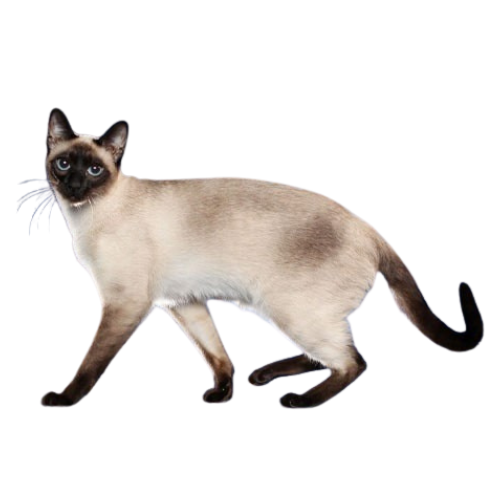
Tonkinese
Tonkinees on kassitõug, mis on aretatud Siiami ja Birma kassi ristamise teel. Tuntuim on lühikarvaline tonkinees, kuid on olemas ka poolpikakarvaline (mõnikord nimetatakse seda ka tiibeti kassiks). Lühikarvalise karv on pehme, tihe ja läikiv, pikakarvalise karv aga poolpikk, siidine ja liibub kehale.
Tonkinese cats have three main patterns: color point (strong contrast between the paws and body color, blue eyes), tabby (medium contrast, aquamarine eyes), and sepia (little contrast, amber eyes). Color variations include cream, red, lilac, blue, chocolate, and tortoiseshell.
Tonkinese cats are medium-sized, muscular, and elegant. When you pick them up, they often seem surprisingly heavy.
The tail and legs are slender but well proportioned to the body, ending in characteristic oval paws. The head is gently rounded and slightly wedge-shaped, with a blunt muzzle and moderately almond-shaped eyes. The ears are set on the sides of the head, emphasizing their intelligent expression.
The Tonkinese is a balanced, intelligent, and sociable breed that combines the characteristics of the Siamese and Burmese cats. They are affectionate, playful, and enjoy human company – often following their owner around the house like a dog. Thanks to their friendly nature, they are well suited to families with children as well as individuals looking for a close companion.
Tonkinees are curious and highly intelligent – they enjoy both active games and quiet moments in their owner’s lap. At the same time, they are sensitive and emotionally attuned to the moods of their family. They may be cautious in new situations or with strangers at first, but once they trust you, they become loyal companions.
Although not as talkative as Siiam, Tonki communicates with his soft, melodic voice, clearly expressing his desires or simply seeking attention. He values routine and feels most comfortable in an environment that offers stability, opportunities to play, and loving company.
- Very sociable and loving, actively seeks contact with people
- Known as a “dog person” – often follows the owner around and wants to participate in every activity
- Very playful and curious – enjoys interactive games and learning
- Suitable as a child-friendly family favorite, but also enjoys a more peaceful environment
- Less talkative than here, but uses soft and melodic meows to communicate.
- Generally healthy breed
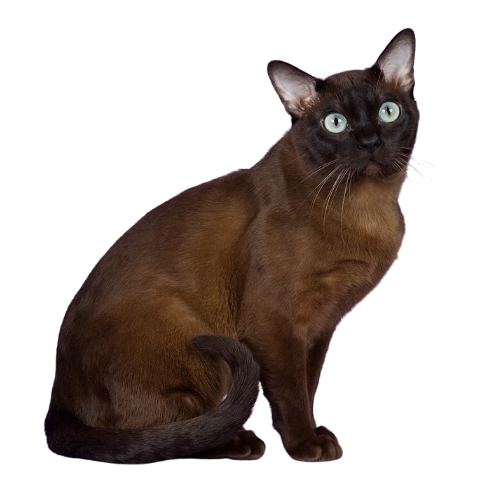
Turkish Angora
The Turkish Angora cat is a very elegant, medium-sized cat. It has an athletic body and great flexibility. Weight 2.5-5 kg. Its coat is feather-like, medium length on the body, long on the neck, chest, belly, and tail. Its coat is very fine, silky, and airy. The undercoat is sparse. The hair is longer on the belly, tail, around the neck, and in the “trousers” area. The head is triangular, the eyes are large and almond-shaped, amber, blue or green. Among white individuals, there are also those with different colored eyes. The ears are large, high and turned forward. There is long hair inside and on top of the ears.
Turkish Angoras are most commonly snow white in color, but they can also be black, blue, chocolate brown, or lilac with a spotted pattern.
The Turkish Angora is a sociable, playful cat with a strong personality. It is a cat that values its freedom and independence. This does not prevent it from being very attached to its owner. It is gentle, affectionate, and can form a close bond with its owner. It is intelligent, curious, and loves to play. Although it is independent, it can be “clingy.” It is always close to the family and seeks cuddles.
The Turkish Angora is a curious cat that rarely fears strangers. It is active and energetic. As it is very intelligent and cunning, it needs a lot of exercise and play. It can be a real challenge for those who want peace and quiet. It can be stubborn and does not tolerate being ignored, knowing how to draw attention to itself.
- Very intelligent and attentive – it is often said that Turkish Angoras “understand” their owners.
- Sociable and affectionate, seeks human closeness and loves to communicate
- Playful, active, and energetic, enjoys heights and climbing
- Generally healthy and long-lived breed
- White cats may be deaf, especially those with blue eyes.
- Well suited for families who want an active and sociable cat
- Also suitable for apartments, provided there is sufficient stimulation and opportunities for play
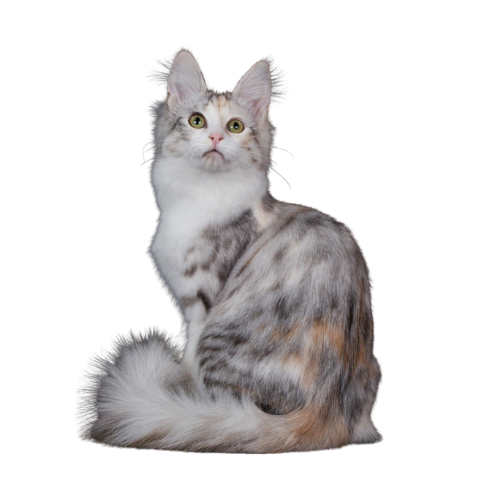
Turksih Van
The Turkish Van is a cat breed known for its unique appearance, friendly nature, and rare love of water.
The Turkish Van is a large, muscular, yet elegant cat with a white body and a distinctive colored head and tail. This breed does not reach full maturity until the age of three or four. The cats are well-balanced and proportionate, with a strong appearance. The head is broad and wedge-shaped, with a medium-length nose that is slightly concave in profile. The large ears are set high on the head and close together. The eyes are large, oval, and expressive. The body is long and strong, and the chest is broad and muscular, especially in males. The legs are of medium length, and the paws are small, round, and tufted. The tail is brush-like and balances the proportions of the body with its length.
The Turkish Van’s coat is long, soft, and silky, without an undercoat. The winter coat is longer and heavier than the summer coat, and the collar around the neck and chest becomes more luxuriant with age. The cat’s body is predominantly white. There is a colored pattern on the head, but it does not extend beyond the eyes or ears. The color of the head is divided by a vertical white stripe. The tail is colored and may have faint stripes, which are more noticeable in kittens, and the color of the tail may extend slightly onto the back. This coloration is characteristic of this breed and is called the “van pattern.” The patches of color on the head and tail may be red, cream, black, blue, tortoiseshell, etc. The eyes may be amber, blue, or both. The nose and paw pads are pink.
The Turkish Van is known for its friendly and open nature. These cats are curious, intelligent, and very people-oriented. They enjoy human company and are usually very playful. The Turkish Van’s personality can be described as lively and energetic, but at the same time calm and balanced.
The Turkish Van is generally a very social cat that gets along well with both people and other animals. They are usually very tolerant of other cats and even dogs. Although the Turkish Van is social and loves human company, it also has an independent side. It does not need constant attention and is able to entertain itself when family members are busy. However, when you are at home, it will likely seek your attention and playtime.
The Turkish Van is an active and playful cat that needs a lot of physical and mental stimulation. They enjoy a variety of games, from chasing mice to more complex puzzle games.
- A highly intelligent and active cat that needs mental and physical stimulation
- Playful and curious – enjoys exploring, climbing heights, and water
- Very strong character – not a typical lap dog, but rather independent and self-reliant
- Generally strong and healthy breed
- Requires regular coat care, especially during shedding season
- Suitable for an active family where he will receive plenty of attention, opportunities for exercise, and playtime.
- May be suitable for children, but prefers calmer and more understanding communication
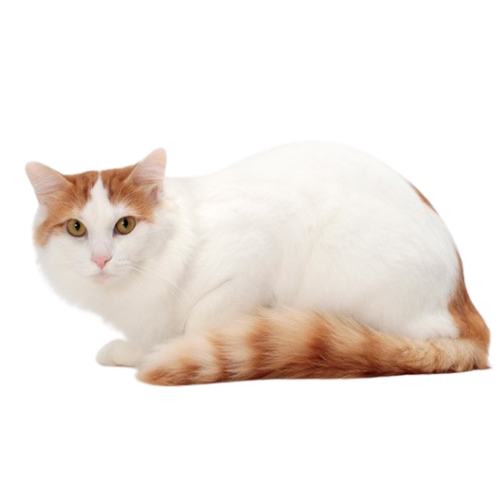
Russian Blue
The Russian Blue is a slender and elegant cat with striking blue-gray fur with a silvery sheen. It is a medium-sized cat breed, with females typically weighing 2–4 kg and males 3–5.5 kg.
The coat is short, dense, and evenly colored. Due to the undercoat, it must stand away from the body. The characteristic blue tone actually means a grayish shade with a silvery sheen. White is not allowed. The body is long and muscular, yet graceful, creating a streamlined silhouette. The head is triangular with clear lines, without roundness, and a prominent muzzle. The ears are large, widely set and erect, striking in size and position.
The eyes are always green, usually emerald green, but the shade can vary from light green to a darker shade. The eyes are almond-shaped, slightly upturned and widely spaced, giving the face an intelligent and expressive look. The neck is long and slender, blending smoothly with the long body. The legs are slender and fine, and the tail is long.
The Russian Blue’s character is best revealed in the company of its family. Their unwavering devotion to their family or owner is difficult for strangers to understand, as Russian Blues tend to keep their distance when guests arrive and only socialize on their own terms. Russian Blues often choose “their person,” whom they follow around everywhere, and while they are polite to other family members, they keep a certain distance. Russian Blues enjoy a routine and secure lifestyle, which is why they may protest loudly in unfamiliar surroundings, such as at exhibitions, giving the impression that they are moody and aggressive cats. In reality, Russian Blues are gentle companions, and you simply have to experience their devotion to their owners to believe it. Russian Blues are smart and easy to train, for example, to open doors and bring back toys. They get along well with other cats and dogs, but Russian Blues are not the best choice for households with many cats.
This is an intelligent cat. He likes to play, but is not hyperactive. Playing brings him joy and physical well-being.
- A very intelligent, balanced, and sensitive cat
- Strongly attached to his family, but often reserved towards strangers
- Prefers quiet and peaceful environments – well suited to calmer homes
- Very loyal and faithful – often becomes particularly attached to one family member
- Playful but not pushy; enjoys interactive toys and being close to its owner
- Generally a breed with very good health
- Low grooming needs – dense coat does not mat
- Perfect for people who appreciate a calm, dignified, and deeply affectionate cat.
- Very suitable for those who live in an apartment or prefer a quieter home environment
- Also well suited for single people looking for a loyal companion